How to Choose the Best Battery Pump for Your Needs?
Choosing the best battery pump can seem challenging. With many options available, selecting the right one is crucial for your specific needs. A battery pump offers convenience and portability, making it an ideal choice for various applications. Whether for outdoor activities, home use, or emergency situations, reliable performance is essential.
When considering a battery pump, think about power and durability. The efficiency of the pump often hinges on its battery life and suction capabilities. It’s important to evaluate how long it can run on a single charge. Additional features, like automatic shutoff or adjustable flow rates, may enhance usability. Keep in mind, however, that not every feature will benefit everyone.
In conclusion, thorough research is key. Beyond personal preferences, manufacturer reputation plays a significant role in reliability. Seek user reviews and expert insights to identify high-quality models. Finding the perfect battery pump requires time and effort, but the right choice will meet your demands effectively.
Understanding Different Types of Battery Pumps: A Comprehensive Overview
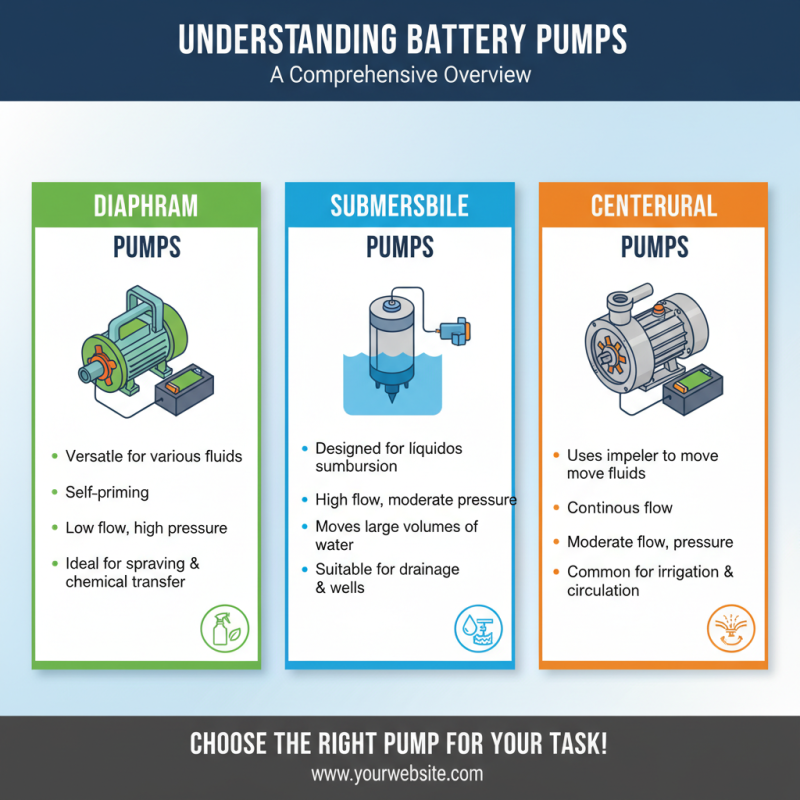
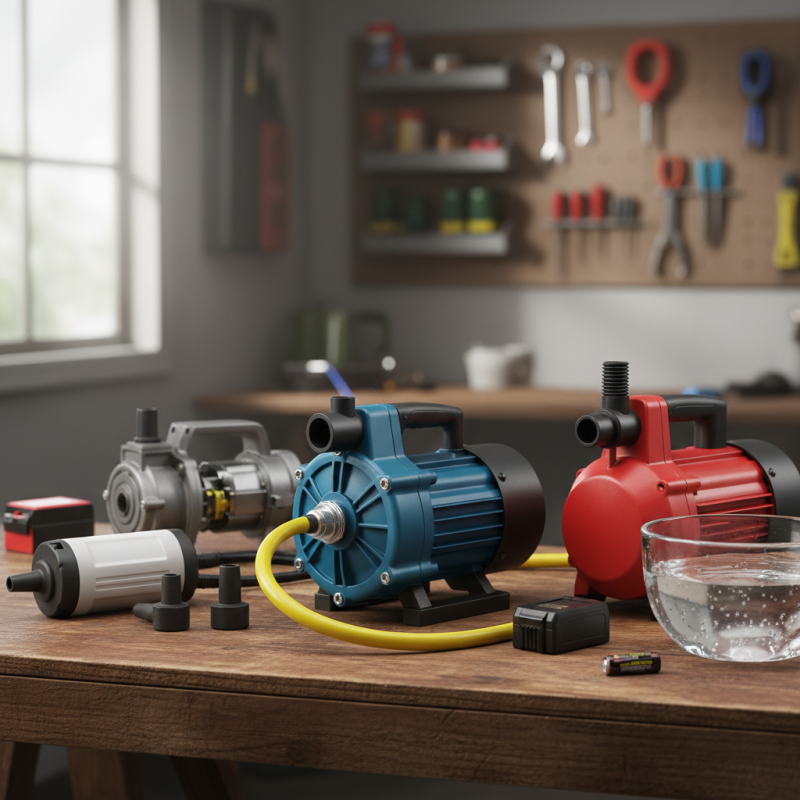
Battery pumps are essential tools in various industries, from agriculture to construction. Understanding the different types of battery pumps can help you make an informed choice. Three main categories exist: diaphragm pumps, submersible pumps, and centrifugal pumps. Each type serves distinct functions and is suited for specific tasks.
Diaphragm pumps are versatile and capable of handling abrasive fluids. They operate by moving a flexible diaphragm, creating suction to draw fluid in and push it out. According to industry reports, they are often utilized in settings requiring a reliable solution for thick or viscous liquids. On the contrary, submersible pumps are designed to function underwater, making them ideal for draining, dewatering, or sewage applications. They can handle large volumes of water efficiently, which might be critical in emergencies. However, they are less efficient when it comes to moving higher viscosity fluids.
Centrifugal pumps are recognizable by their rotating blades, which create a flow of liquid. These pumps excel at transferring low-viscosity fluids quickly. They tend to be less robust in handling solid materials. A study from the Pump Industry Journal indicates a growing trend of adopting battery-operated models. Their portability and eco-friendliness appeal to environmentally conscious professionals. However, battery life and pump capacity remain areas needing consideration. Investing time in understanding these attributes can significantly enhance overall performance.
Key Factors to Consider When Selecting a Battery Pump for Your Application
When selecting the right battery pump, several key factors come into play. Assess the pump's intended use. For example, will it handle water or heavier liquids? Different applications require different capabilities. Battery pumps vary in power and specifications, which directly affects performance. For lighter tasks, a smaller, less powerful pump may suffice. However, for demanding applications, a robust pump is essential.
Battery life is another central consideration. A long-lasting battery ensures that your pump can operate efficiently without frequent recharging. Look for models with fast charging features as well. Portability is crucial if you plan to move the pump frequently. Weigh the pump and gauge its size to ensure it fits your needs. Sometimes, a heavy pump can be cumbersome. A good pump should be easy to handle while remaining effective.
Moreover, assessing the design and build quality can reveal a lot about the pump’s durability. Materials should withstand wear and stress over time. A poorly constructed pump may lead to leaks or failures, undermining reliability. It’s essential to weigh your options and think critically about your selection. Each choice impacts performance, so take your time. Users often regret hasty decisions.
How to Choose the Best Battery Pump for Your Needs?
| Feature |
Description |
Importance |
| Power Source |
Types of batteries (Li-ion, NiMH, etc.) used. |
High |
| Flow Rate |
Rate at which the pump can move fluid (liters per minute). |
High |
| Pressure Rating |
Maximum pressure the pump can handle (psi). |
High |
| Weight |
Impact on portability and ease of use. |
Medium |
| Battery Life |
Duration the pump can operate before needing a recharge. |
High |
| Durability |
Material quality and resistance to corrosion and wear. |
Medium |
| Ease of Use |
User-friendliness in terms of setup and operation. |
High |
| Price |
Overall cost and warranty offered. |
High |
Evaluating Battery Capacity and Performance Metrics for Optimal Use
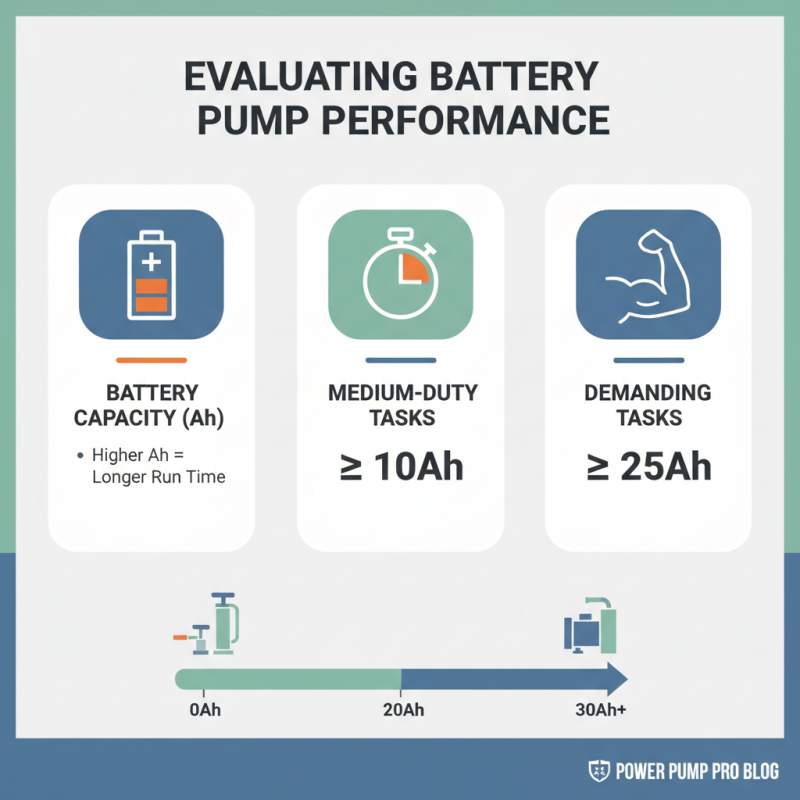
When selecting a battery pump, evaluating battery capacity is essential. Battery capacity is usually measured in amp-hours (Ah). A higher Ah rating indicates a longer run time. For example, a 20Ah battery can run a pump for 20 hours at 1 amp. Industry reports suggest that pumps with at least 10Ah are suitable for most medium-duty tasks. However, demanding tasks may require pumps with 25Ah or more.
Performance metrics also play a crucial role. Consider the pump's flow rate, usually measured in gallons per minute (GPM). A higher GPM means faster fluid transfer. An average battery pump operates at 3-5 GPM. Research indicates that pumps with adjustable flow rates provide greater versatility. This flexibility can be a game-changer for varied applications.
It's important to reflect on your specific needs. Not all pumps perform equally across different conditions. Factors like temperature and altitude can affect battery efficiency. For instance, batteries tend to lose capacity in extreme temperatures. User reviews and industry reports suggest monitoring real-world performance to make informed decisions. Each application may reveal different strengths and weaknesses, warranting a thorough evaluation before purchase.
Comparative Analysis of Popular Brands and Models in the Battery Pump Market
When selecting a battery pump, understanding the range of options is crucial. Many brands offer varied features, but not all meet quality standards. Reliability should be your top priority. Look for models that promise durability and performance. Battery capacity is essential; it affects how long you can use the pump before needing a charge.
A comparative analysis reveals significant differences among popular brands. Some prioritize ease of use, while others focus on power output. It's important to examine user reviews to gain insights into performance. Much of the information available can be overwhelming. Filtering through these reviews might reveal discrepancies that force you to question the claims made by manufacturers.
Price is often a reflection of quality, but it won't guarantee it. Even high-end models can underperform. Researching different models can help avoid costly mistakes. Consider the specific needs of your tasks. The right battery pump should cater to those needs without unnecessary features that complicate usage. Take your time to reflect on your options and ask industry experts for their opinions.
Maintenance Tips and Best Practices for Prolonging Battery Pump Lifespan
Maintaining a battery pump is crucial for its longevity and performance. Regular checks can prevent unexpected failures. One key practice is to clean the pump regularly. Dust and debris can cause overheating. Make sure to examine all components, especially the battery connections. A dirty connection can lead to performance issues or total failure.
Another important aspect is monitoring battery health. Keep an eye on charging cycles to avoid deep discharges. Lithium batteries can be especially sensitive. Overcharging may reduce lifespan too. Make it a habit to perform routine maintenance checks. This proactive approach can save you money in the long run.
Lastly, proper storage is essential. Store your battery pump in a cool, dry place. Extreme temperatures can harm the battery. It's also wise to periodically recharge the pump, even if not in use. Aim for a balance—don’t let it sit fully charged or completely drained. These small steps can have a significant impact on the pump's overall performance.
Battery Pump Performance Comparison