How to Choose the Best USB Charger Receptacles for Your Needs?
When selecting USB Charger Receptacles, understanding your specific needs is crucial. The market is flooded with options, making it challenging to choose the best one. According to a recent industry report by TechMarket Insights, the demand for USB charger receptacles is expected to grow by 15% annually. This growth reflects the increasing need for efficient charging solutions in homes and offices.
Dr. Alex Mercer, a prominent expert in electrical engineering, emphasizes, "Choosing the right USB charger receptacles can significantly enhance user convenience." The evolving technology behind these devices offers various features, such as rapid charging and multiple ports. It's essential to consider not only compatibility with your gadgets but also the performance of the receptacles.
However, despite the advancements, many consumers still face challenges. Some may overlook important specifications or assume that all receptacles perform similarly. This often leads to dissatisfaction and the need for replacements. Careful research and consideration of your unique requirements can mitigate these issues, ensuring lasting satisfaction with your choice of USB charger receptacles.
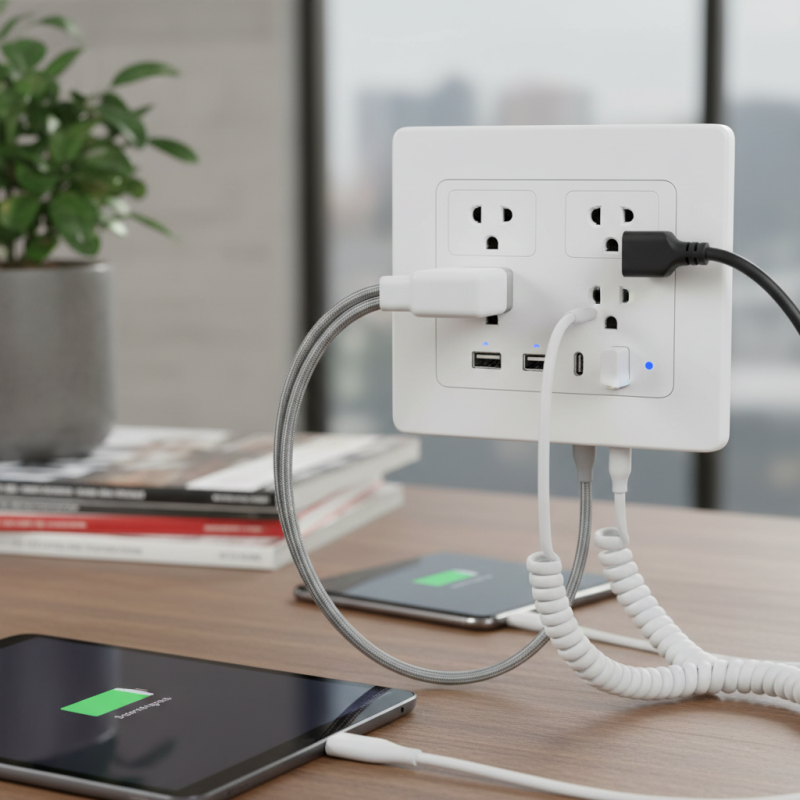
Understanding USB Charger Receptacles and Their Types
USB charger receptacles have become essential in modern homes and offices. Understanding their types can help users select the right one for their needs, enhancing both convenience and efficiency. There are generally three primary types of USB receptacles: standard USB-A, USB-C, and quick charge ports. The choice between these types can significantly affect charging speed and device compatibility.
USB-A is widely recognized and compatible with many devices. However, it has limitations in terms of power delivery. Emerging technologies favor USB-C due to its capability to deliver up to 100 watts of power. According to a report by MarketsandMarkets, the USB-C market is expected to grow by 29% annually through 2025. This surge in popularity reflects a shift towards faster charging and data transfer.
Quick charge receptacles offer another layer of functionality. They support rapid charging for compatible devices, reducing downtime. Nonetheless, not all quick charge ports are the same. The effectiveness can vary based on the specific protocol used. Users should be mindful that while rapid charging is advantageous, it may lead to increased heat, potentially impacting device longevity. Hence, careful consideration of the type of USB receptacle is crucial. A thoughtful approach ensures optimal performance while maintaining device safety.
Factors to Consider When Choosing USB Charger Receptacles
Choosing the right USB charger receptacles can be challenging. Several key factors must be considered. The power output is crucial. Look for models that support fast charging. According to a recent industry report, receptacles with a minimum output of 2.4 amps per port are becoming the standard to meet user demands. This ensures devices charge quickly and efficiently.
Another important factor is versatility. Many spaces require multiple charging options. Models with both USB-A and USB-C ports provide flexibility. Reports show that over 70% of users prefer receptacles with diverse charging options to cover their devices. This adaptability helps in busy environments like offices or homes.
Additionally, installation type matters. Some receptacles are designed for easy installation while others may need professional help. It's worth noting that DIY installation can lead to improper wiring. Proper installation ensures safety and reliability. Balancing ease of use with proper installation methods is critical. This reflection on user needs helps choose wisely.
Assessing Compatibility with Your Devices
Choosing the right USB charger receptacles starts with compatibility. Different devices require varying charging speeds and voltages. According to recent industry reports, over 80% of modern electronics utilize USB-C. This trend suggests a clear move towards universal charging solutions. Devices like smartphones, tablets, and even laptops are increasingly adopting USB-C ports.
Moreover, many devices now support fast charging. A study by the International Electrotechnical Commission indicates that chargers delivering 18 watts or more can significantly reduce charging times. Ensuring that your USB charger receptacle can handle these specifications is crucial. However, with the variety of options available, it’s paramount to assess the charging capabilities of your specific devices.
Consider the power output too. Some chargers can’t support multiple devices simultaneously without compromising performance. This can lead to slower charging times. It’s essential to read the specifications carefully. There are instances where users expect fast charging, but the actual output is much lower than anticipated.
Understanding these factors can help you make informed choices. Compatibility is about more than just connection types; it’s about delivering reliable power when you need it most.
Evaluating Power Output and Charging Speed
When choosing the best USB charger receptacles, power output and charging speed are crucial factors. According to a report by the International Electrotechnical Commission (IEC), USB chargers can provide power ranging from 5 watts to 100 watts. It's important to choose a receptacle that meets your device's power requirements. For example, smartphones often need 10 to 20 watts for fast charging, while tablets may require more.
Charging speed is influenced by several factors, including voltage and amperage. The USB Power Delivery specification suggests that higher voltages (up to 20V) and currents (up to 5A) can significantly reduce charging times. A study from the Consumer Technology Association (CTA) revealed that devices with 18W chargers can charge a phone to 50% in about 30 minutes. However, not every receptacle supports this standard, potentially leading to user frustrations.
Not all receptacles are equal. Some may claim fast charging capabilities but deliver less than expected. User reviews often highlight experiences of slow charging or inadequate power for multiple devices. It's essential to do research and check specifications before making a purchase. Ignoring these details can result in underperformance and dissatisfaction. Prioritizing power output and charging speed is vital for an effective charging experience.
Power Output Comparison of USB Charger Receptacles
This chart illustrates the power output of various USB charger receptacles. As indicated, the USB Type-C and Power Delivery options provide significantly higher power output compared to the traditional USB Type-A options, making them ideal for faster charging needs.
Installation and Safety Considerations for USB Chargers
When installing USB charger receptacles, safety is crucial. Ensure you choose the right voltage to prevent overheating. Overloading circuits can cause fires. Avoid cheap, unverified products. Stick with reputable sources for reliability.
Tips: Always check the amp rating. Ensure it matches your devices. Consider using receptacles with built-in surge protection for extra safety. This can prevent damage to your electronics.
Installation requires careful attention to wiring. Follow the manufacturer's instructions closely. Verify if your existing wiring can support new receptacles. Improper installation may lead to technical issues.
Tips: Test your outlets regularly. Look for any signs of wear or malfunction. If you notice anything unusual, consult a professional. This can save you from bigger problems later. Prioritize both functionality and safety.