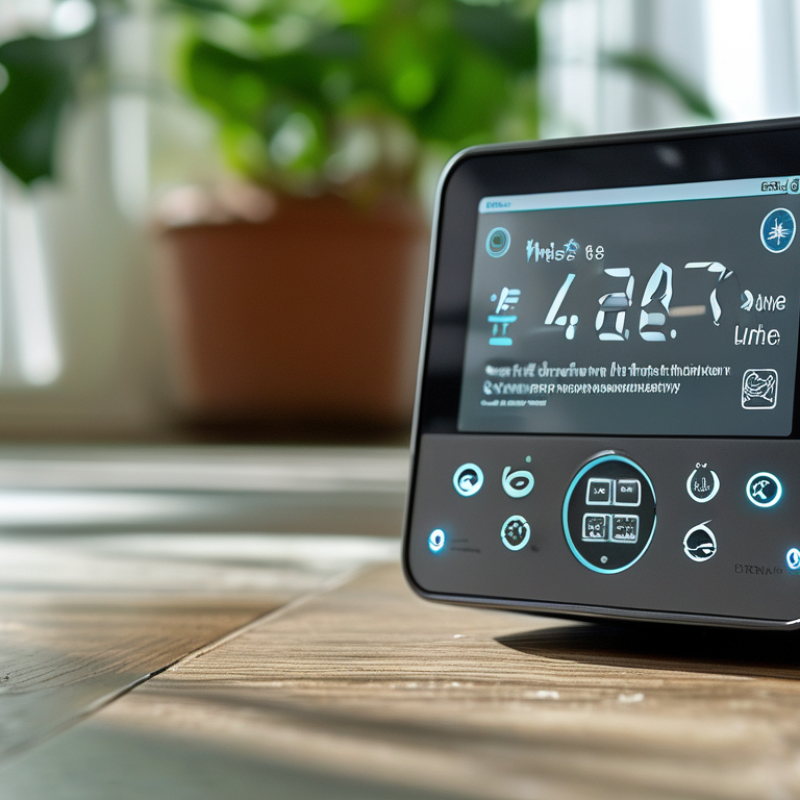
What is a Duct Air Quality Monitor and Why is it Essential?
Indoor air quality is increasingly important for health and well-being. A Duct Air Quality Monitor effectively measures air contaminants within ventilation systems. These devices report on pollutants like dust, allergens, and volatile organic compounds.
Many homeowners and businesses overlook their duct systems. They assume that if the air feels clean, it must be safe. This assumption can be misleading. A Duct Air Quality Monitor can reveal hidden issues. Regular monitoring helps maintain a healthy environment and prevent long-term health problems.
Investing in a Duct Air Quality Monitor demonstrates a commitment to safety and health. It builds trust for clients and family members. Monitoring becomes essential as indoor air can be worse than outdoor air. Understanding and managing indoor air quality is not only wise, it's necessary for a healthy future.
Understanding the Basics of Duct Air Quality Monitors
Duct air quality monitors are essential tools for maintaining indoor air health. They measure pollutants, humidity, and temperature in HVAC systems. By assessing these factors, they help ensure that the air circulating in your home or office is safe. Good air quality is vital for everyone's well-being. Poor conditions can lead to respiratory issues and other health problems.
Understanding how these monitors work is crucial. They use sensors to detect particulate matter, volatile organic compounds (VOCs), and carbon dioxide levels. Regular monitoring can inform better ventilation decisions. It is interesting to note that many users overlook the importance of maintenance. Dirty sensors can deliver inaccurate readings, leading to complacency over air quality.
Choosing the right location for these monitors is also significant. Installing them too close to walls or furniture can obstruct airflow, affecting their accuracy. This highlights a common misunderstanding: location matters. Not everyone realizes that duct placement influences performance. Careful positioning enhances reliability and ensures that the data collected reflects true air quality conditions.
Key Components and Functionality of Duct Air Quality Monitors
Duct air quality monitors are essential for maintaining healthy indoor environments. These devices measure pollutants like CO2, VOCs, and particulate matter. Research indicates that air quality can significantly impact human health. The World Health Organization states that poor indoor air quality leads to increased respiratory diseases.
Key components of these monitors include sensors, data loggers, and real-time display systems. Sensors detect various pollutants. They can monitor air temperature and humidity. Data loggers store this information for later analysis. These components work together to provide a comprehensive view of air quality.
Tips: Regular maintenance of duct monitors is crucial. Perform routine calibrations to ensure accuracy. Check the sensors for dirt or blockage, as this can affect readings.
Understanding the functionality of duct air quality monitors is vital. They not only alert you to pollution levels but also help inform ventilation adjustments. This continuous feedback loop can enhance HVAC system efficiency. However, monitoring alone is insufficient. One must also act on the data gathered to achieve better air quality.
Duct Air Quality Monitor Data Analysis
This chart represents key air quality parameters measured by a duct air quality monitor, including CO2 levels, PM2.5 concentrations, humidity, temperature, and VOCs. Monitoring these factors is crucial for ensuring healthy indoor air quality.
Importance of Air Quality Monitoring in HVAC Systems
Air quality monitoring is crucial in HVAC systems. According to the EPA, indoor air can be up to five times more polluted than outdoor air. This highlights the importance of maintaining healthy air quality within buildings. A duct air quality monitor helps track pollutants like dust, carbon dioxide, and volatile organic compounds (VOCs). By monitoring these factors, you can enhance the air quality significantly.
Implementing air quality monitoring can lead to improved health outcomes. The American Lung Association states that poor indoor air quality can exacerbate respiratory issues. If air quality declines, occupants may experience fatigue and allergies. Regular monitoring helps identify when air quality deteriorates. These insights allow for timely interventions, like increased ventilation or filtration.
**Tips:** Regular filter changes improve air quality. Utilize monitors to help set optimal ventilation rates. Consider integrating real-time monitoring systems for immediate alerts. Investing in air quality solutions can prevent larger health problems down the line. Understanding the data from these monitors can make a difference in creating a safe and comfortable indoor environment.
What is a Duct Air Quality Monitor and Why is it Essential? - Importance of Air Quality Monitoring in HVAC Systems
| Parameter | Importance | Typical Range | Impact of Poor Quality |
| Particulate Matter (PM2.5) | Can penetrate the respiratory system, causing health issues. | 0-35 µg/m³ (Good), 36-55 µg/m³ (Moderate) | Respiratory problems, cardiovascular diseases. |
| Carbon Dioxide (CO2) | Indicator of ventilation effectiveness. | 350-1,000 ppm (Good), 1,001-2,000 ppm (Moderate) | Drowsiness, decreased cognitive function. |
| Volatile Organic Compounds (VOCs) | Source of indoor air pollution, can result in long-term health effects. | 0-200 ppb (Good), 201-500 ppb (Moderate) | Headaches, irritation of the eyes, nose, and throat. |
| Humidity | Affects comfort level and potential mold growth. | 30%-50% (Ideal), 51%-70% (Moderate) | Mold growth, discomfort, increased allergy symptoms. |
How Duct Air Quality Monitors Enhance Indoor Air Quality
Duct air quality monitors are essential tools that significantly improve indoor air quality. These devices are specifically designed to detect and track pollutants within HVAC duct systems. Studies show that indoor air can be five times more polluted than outdoor air. This makes monitoring duct air quality crucial for maintaining a healthy environment.
When duct air quality monitors are installed, they measure pollutants like particulate matter, carbon dioxide, and volatile organic compounds. Research indicates that excess levels of these contaminants can lead to health issues, including respiratory diseases. By providing real-time data, these monitors allow for prompt action. Adjusting ventilation and filtration systems can drastically reduce harmful pollutants.
However, despite the advancement in technology, not all systems are foolproof. Regular calibration and maintenance are necessary for accurate readings. Inconsistent data can lead to misunderstanding air quality levels. This emphasizes the need for thoughtful implementation and continuous evaluation of air quality monitoring systems. It is crucial for indoor environments, especially in commercial spaces, where occupant well-being is a priority.
Factors to Consider When Choosing a Duct Air Quality Monitor
When selecting a duct air quality monitor, several key factors come into play. First, the type of pollutants the monitor detects is crucial. Many monitors focus on particulate matter (PM), volatile organic compounds (VOCs), and carbon dioxide (CO2). According to the Environmental Protection Agency (EPA), indoor air can be two to five times more polluted than outside air. This statistic underscores the need for comprehensive monitoring.
Calibration is another important factor. A reliable duct air quality monitor should be easily calibrated to ensure accuracy over time. Studies indicate that devices not regularly calibrated can yield misleading results. Prospective users should check the device's ease of calibration. Moreover, the device's ability to provide real-time data is critical for timely responses to air quality issues. Many professionals recommend monitors with continuous sampling, ensuring ongoing assessment.
Lastly, look for a monitor that provides data in an understandable format. User-friendly interfaces can make a significant difference in practical applications. Some monitors may present data in complex charts. This can lead to confusion. Therefore, choose devices that emphasize clarity. While advanced features are tempting, clarity should remain a top priority. The goal is to maintain a healthy environment, supported by accessible and accurate data.