How to Choose the Right Liquid Pump for Your Needs?

Choosing the right liquid pump is rarely a simple matter of matching pipe size and motor power. It begins with the liquid itself. Water, oil, chemicals, slurry, and food-grade fluids behave differently inside a pump. Their viscosity, temperature, solids content, and corrosiveness can change the entire selection process.

“A pump is not a pump is not a pump,” says Dr. Lev Nelik, a recognized rotating-equipment specialist and author of Centrifugal and Rotary Pumps. His warning remains practical. A centrifugal pump may move clean water efficiently, yet struggle with thick syrup or abrasive slurry. A positive displacement pump may handle viscosity better, but it can create excessive pressure when the discharge line is restricted.

Small details matter. A pump installed beside a warm storage tank may face vapor formation at the suction inlet. A unit handling sand-filled water may show wear around the impeller after only a few months. Even a quiet motor can hide unstable flow, poor alignment, or incorrect sizing.

This guide explains how to evaluate a liquid pump for real operating conditions. It covers flow rate, head pressure, materials, efficiency, maintenance, and control requirements. It also considers lifecycle cost, not only the purchase price. That part is often overlooked.

There is no perfect pump for every application. Some choices will remain compromises. The goal is a reliable match between the pump, the liquid, and the system. Before selecting equipment, verify the data. Guessing can be expensive.
How to Choose the Right Liquid Pump for Your Needs?

Define Your Liquid Pumping Requirements

How to Choose the Right Liquid Pump for Your Needs?

Define Your Liquid Pumping Requirements

Start with the liquid, not the pump catalog. Record viscosity, temperature, density, acidity, solids content, and vapor pressure. Water at room temperature behaves nothing like a thick cleaning solution. Small errors here can cause overheating, seal damage, or unstable flow. Measure it.

Next, define the required flow rate and total dynamic head. Include elevation, pipe length, fittings, valves, and pressure at the discharge point. A pump selected only by pipe diameter may waste energy or fail to reach the process target. The International Energy Agency reported in Energy Efficiency 2018 that motor-driven systems consume about 69% of industrial electricity. Hydraulic performance deserves serious attention.

Operating conditions matter just as much. Note continuous or intermittent duty, expected start frequency, available power, ambient temperature, and suction conditions. Check net positive suction head carefully. Cavitation may sound like gravel inside the casing. It can quietly destroy performance. The Hydraulic Institute and Europump’s Pump Life Cycle Costs guide identifies energy as a major lifetime cost, often exceeding the purchase price. A cheaper pump can become expensive through throttling, oversized motors, and frequent maintenance.

A practical specification should include acceptable flow variation, efficiency targets, wetted materials, seal requirements, noise limits, and control method. Leave realistic margin, but avoid excessive oversizing. That judgment is not always perfect. Recheck the assumptions with operating data, not guesses. Fancy calculations can still miss a dirty strainer or seasonal temperature change.

How to Choose the Right Liquid Pump for Your Needs?

Define Your Liquid Pumping Requirements by Checking Viscosity

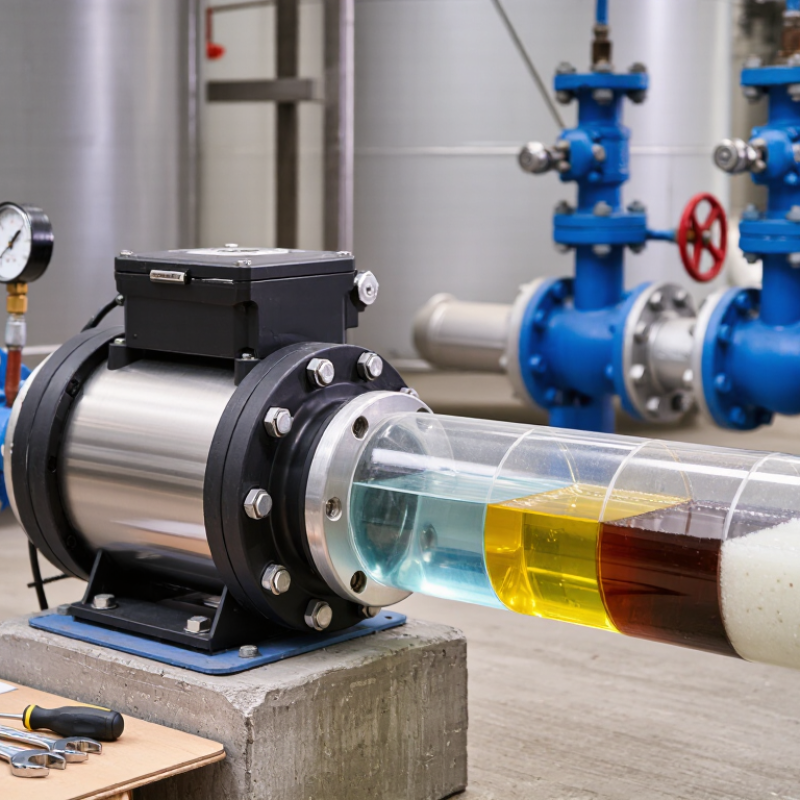
Liquid viscosity is a key requirement when selecting a pump. Low-viscosity liquids such as water generally flow easily, while glycerin and honey require a pump designed to handle greater resistance. The values shown are representative viscosity levels measured at approximately 20°C; actual viscosity can vary with temperature, concentration, and formulation.

Compare Pump Types and Operating Principles

How to Choose the Right Liquid Pump for Your Needs?

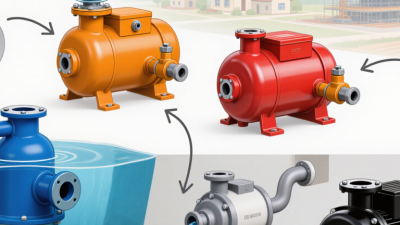
Choosing a liquid pump starts with its operating principle, not its appearance. Centrifugal pumps use a rotating impeller to increase fluid velocity and pressure. They suit clean, low-viscosity liquids and steady flow systems. Their performance can drop when the liquid contains air, particles, or becomes unusually thick.

Positive displacement pumps move a fixed volume during each cycle. Gear, piston, and diaphragm pumps belong to this group. They provide stronger pressure control and handle viscous fluids more effectively. A diaphragm pump can also tolerate certain solids and dry-running conditions. However, it may create pulsating flow. Gear pumps produce smoother delivery, but abrasive particles can wear internal surfaces quickly. My practical mistake was focusing on maximum flow first. Pressure, viscosity, temperature, and suction conditions often matter more.

Tips: Record the liquid’s viscosity at operating temperature. Check required flow and pressure together. Ask whether the pump must self-prime or run dry. Install a filter when particles threaten clearances. Leave a safety margin, but avoid excessive sizing. An oversized pump may waste energy and require constant throttling. Also inspect seals and wetted materials for chemical compatibility. Manufacturer curves and field measurements are useful, yet real installations can behave differently. Pipe length, bends, elevation, and trapped air may change the final result. Test carefully before committing to continuous operation.

How to Choose the Right Liquid Pump for Your Needs? — Compare Pump Types and Operating Principles
Pump Type Operating Principle Typical Flow Range Typical Pressure / Head Viscosity Suitability Advantages Limitations Best-Fit Applications
Centrifugal Pump A rotating impeller increases liquid velocity, and the volute or diffuser converts velocity into pressure. Approximately 1–5,000 m³/h Approximately 5–150 m head; pressure and flow vary significantly with impeller diameter and speed. Best for low- to medium-viscosity liquids, generally close to water-like fluids. High flow capacity Smooth delivery Simple design Low cost per flow rate Usually requires priming; efficiency decreases with high viscosity; not ideal for very low-flow metering or high air content. Water circulation, cooling systems, irrigation, general process transfer, and clean-liquid service.
Positive Displacement Gear Pump Meshing gears trap liquid between the gear teeth and casing, transporting a nearly fixed volume per revolution. Approximately 0.1–500 m³/h Approximately 3–250 bar, depending on construction, speed, and fluid properties. Suitable for medium- to high-viscosity liquids; performance generally improves as viscosity increases within the design range. Accurate flow Good suction capability Compact Handles viscous fluids Can be damaged by abrasive particles; pressure relief protection is essential because flow is not easily stopped by closing a valve. Lubricating oil, fuel transfer, polymers, adhesives, resins, and controlled chemical dosing.
Diaphragm Pump Reciprocating diaphragms change chamber volume while check valves control suction and discharge. Air-operated versions use compressed air to move the diaphragms. Approximately 0.01–100 m³/h Approximately 2–20 bar for many industrial air-operated designs. Handles low- to high-viscosity fluids, slurries, and liquids containing suspended solids. Self-priming Can run dry briefly Good chemical resistance Handles solids Pulsating flow; compressed-air models may have lower energy efficiency; diaphragm and valve wear depend on the fluid. Corrosive chemicals, wastewater, paints, slurries, transfer from drums, and applications requiring leak-resistant isolation.
Peristaltic Pump Rollers or shoes compress a flexible tube and move liquid through the tube by progressive occlusion. Approximately 0.001–100 m³/h Approximately 1–15 bar, depending mainly on tubing and pump design. Suitable for abrasive, shear-sensitive, viscous, and solids-containing liquids. Fluid contacts tubing only Excellent containment Self-priming Can run dry Tubing is a wear component; flow pulsation is common; maximum pressure and temperature are limited by tubing material. Metering chemicals, laboratory dosing, wastewater sludge, abrasive slurries, and hygienic or contamination-sensitive transfer.
Piston or Plunger Pump A reciprocating piston or plunger changes chamber volume and uses inlet and outlet check valves to create positive displacement. Approximately 0.001–500 m³/h Approximately 10–1,000 bar; high-pressure models require specialized design and materials. Best for clean or lightly contaminated liquids with low to medium viscosity. Very high pressure Precise metering High efficiency Reliable output Pulsating discharge; seals and valves require maintenance; abrasive or solids-filled liquids can accelerate wear. High-pressure cleaning, reverse osmosis feed, injection systems, chemical metering, and hydraulic testing.
Progressive Cavity Pump A single-helix rotor rotates inside a double-helix elastomer stator, forming sealed cavities that progress from suction to discharge. Approximately 0.01–500 m³/h Approximately 6–60 bar, depending on the number of stages. Excellent for viscous, shear-sensitive, and solids-containing fluids. Low-pulsation flow Good solids handling Accurate transfer Gentle pumping Running dry can damage the stator; elastomer compatibility and temperature limits must be checked; longer maintenance time may be required. Sludge, food products, polymers, wastewater, oils, and fluids requiring gentle handling.
Screw Pump One or more rotating screws create sealed cavities that move liquid axially along the screw threads. Approximately 0.1–5,000 m³/h Approximately 5–100 bar, depending on screw configuration and speed. Suitable for low- to high-viscosity liquids; some designs handle limited amounts of entrained gas and solids. Low pulsation Quiet operation High flow stability Good for viscous fluids Usually more complex and costly than basic centrifugal pumps; abrasive solids can cause wear; correct lubrication is important. Fuel and oil transfer, marine systems, process fluids, polymer service, and applications requiring smooth continuous flow.
Vane Pump Sliding vanes in a rotating rotor create expanding chambers at the inlet and contracting chambers at the outlet. Approximately 0.5–300 m³/h Approximately 3–200 bar, depending on the design. Best for clean, lubricating, low- to medium-viscosity liquids. Smooth flow Good metering ability Compact construction Good suction performance Vanes are sensitive to abrasive contamination; dry running and excessive viscosity can cause rapid wear. Fuel dispensing, hydraulic systems, solvent transfer, lubrication systems, and clean industrial liquids.
Selection note: The stated ranges are typical engineering ranges rather than guaranteed ratings. Final pump selection should be based on required flow, differential pressure or head, liquid viscosity, temperature, density, solids content, vapor pressure, chemical compatibility, suction conditions, and operating cycle. Always verify the manufacturer’s performance curve and application limits for the specific duty.

Match Pump Materials to the Liquid

Choosing a liquid pump begins with the liquid, not the flow rate. A pump may move water well but fail quickly with solvents, acids, oils, or abrasive mixtures. Stainless steel suits many clean, moderate-temperature liquids. However, chloride-rich water can cause corrosion. Polypropylene handles many corrosive chemicals at lower temperatures. PVDF offers stronger chemical resistance, but it costs more. Material selection is never universal.

Check the liquid’s concentration, temperature, viscosity, and suspended solids. These details change compatibility. PTFE is useful for demanding chemical contact and seals. EPDM often works with water-based fluids, while FKM may suit oils and higher temperatures. These are practical starting points, not guarantees. Review the liquid’s safety data sheet and compatibility table. Then confirm every wetted part, including the casing, impeller, shaft, gasket, and fittings.

A small trial can prevent an expensive mistake. Run the pump with the actual liquid, if safe, and inspect swelling, cracks, leaks, discoloration, and unusual noise. Measure performance after several hours, not only during startup. Field inspections have shown chemically resistant casings paired with unsuitable seals. The pump looked correct but failed at the joint. That detail is easy to miss. Ask for temperature limits and test evidence when information seems vague. Record the final material choice for future maintenance.

Evaluate Flow Rate, Pressure, and Efficiency

Choosing a liquid pump starts with the real operating point, not the largest catalogue rating. Measure required flow in litres per minute or cubic metres per hour. Then calculate pressure, including elevation, pipe friction, valves, filters, and tank conditions. A pump delivering high flow at low pressure may fail when a filter gradually clogs.

The U.S. Department of Energy reports that pumping systems can represent about 25% of industrial electricity consumption. That figure makes efficiency a design requirement, not a bonus. Compare the pump curve with your duty point, then check efficiency at normal and reduced demand. Variable-speed operation can reduce throttling losses, but it is not automatically efficient. Poor control settings may waste energy while appearing technically correct.

Field experience also exposes uncomfortable gaps. I have seen flow estimates based on outdated pipe layouts and pressure readings taken near the wrong connection. The first calculation is often wrong. Recheck it. The Hydraulic Institute recommends evaluating pumps across their operating range, rather than relying on one advertised efficiency value. Use ISO 9906 test principles when verified performance matters. Record motor input, suction pressure, discharge pressure, and actual flow during commissioning. A small pressure error can distort the efficiency calculation. Maintenance data matters too. Rising power consumption may indicate wear, blockage, air entry, or a changing process. Choose a pump that operates near its best efficiency point, while allowing realistic variation in demand.

Check Installation, Maintenance, and Total Cost

How to Choose the Right Liquid Pump for Your Needs?

Installation affects pump performance more than many buyers expect. Check the required flow, pressure, liquid temperature, and viscosity before choosing a model. A pump handling thick fluid may need a larger motor and wider piping. Keep the suction line short, straight, and properly supported. Avoid sharp bends near the inlet. They can increase turbulence and cause cavitation. Align the pump and motor carefully. Even slight misalignment may create vibration, seal damage, and early bearing failure. Leave enough space for inspection and part replacement.

Maintenance should be planned before installation. Install pressure gauges where operators can read them safely. Monitor unusual noise, heat, leakage, and changing discharge pressure. These signs often appear before a serious failure. Clean strainers regularly, especially when the liquid contains particles. Never allow the pump to run dry unless its design permits it. A simple maintenance log can record operating hours, seal changes, and energy use. It sounds basic, but records are often incomplete.

Purchase price is only one part of total cost. Compare motor efficiency, spare parts, labor, cleaning time, and expected downtime. A cheaper pump can become expensive when seals fail every few months. However, the most advanced option is not automatically best. Oversizing may waste electricity and create unstable operation. I would review real operating conditions twice, because estimates are often too optimistic. Leave room for uncertainty. A practical choice should be serviceable, efficient, and suitable for the actual installation.