Top Tips for Choosing the Best Well and Pump Systems in 2025
As the world moves further into 2025, the importance of selecting the right well and pump systems cannot be overstated. With increasing concerns over water availability and quality, homeowners and businesses alike are seeking reliable solutions to meet their water needs. John Smith, a leading expert in the well and pump industry, emphasizes this by stating, "Investing in the right well and pump systems is not just a choice; it's a necessity for sustainable water management in the future."
Choosing the best well and pump systems involves understanding various factors, including system efficiency, maintenance requirements, and environmental impact. As advancements in technology continue to evolve, consumers are presented with a diverse range of options that cater to both residential and commercial needs. It is crucial to stay informed about these developments and how they can affect your water sourcing decisions.
In this guide, we'll explore top tips for selecting the ideal well and pump systems that align with your needs in 2025. From assessing your water demand to understanding the latest industry trends, this exploration aims to empower you to make informed choices that contribute to effective water resource management while ensuring cost-efficiency and reliability.

Understanding Well and Pump Systems: Key Components Explained
When considering well and pump systems, it's essential to understand their key components to make informed choices. The primary element of a well system is the well itself, which is typically a drilled shaft that accesses groundwater. The depth and diameter of the well can significantly influence water availability and quality. It’s crucial to ensure that the well is constructed in compliance with local regulations and standards to prevent contamination and ensure longevity.
The pump system serves as the heart of water delivery, converting mechanical energy into hydraulic energy to move water from the well to the surface. There are various types of pumps available, including submersible, jet, and solar pumps, each suited for different well depths and water requirements. Additionally, it's vital to consider components such as pressure tanks, which maintain consistent water pressure and prevent pump cycling. Understanding these components not only aids in selecting a suitable system but also ensures long-term efficiency and reliability of your water supply.
Factors to Consider When Choosing a Well Location in 2025
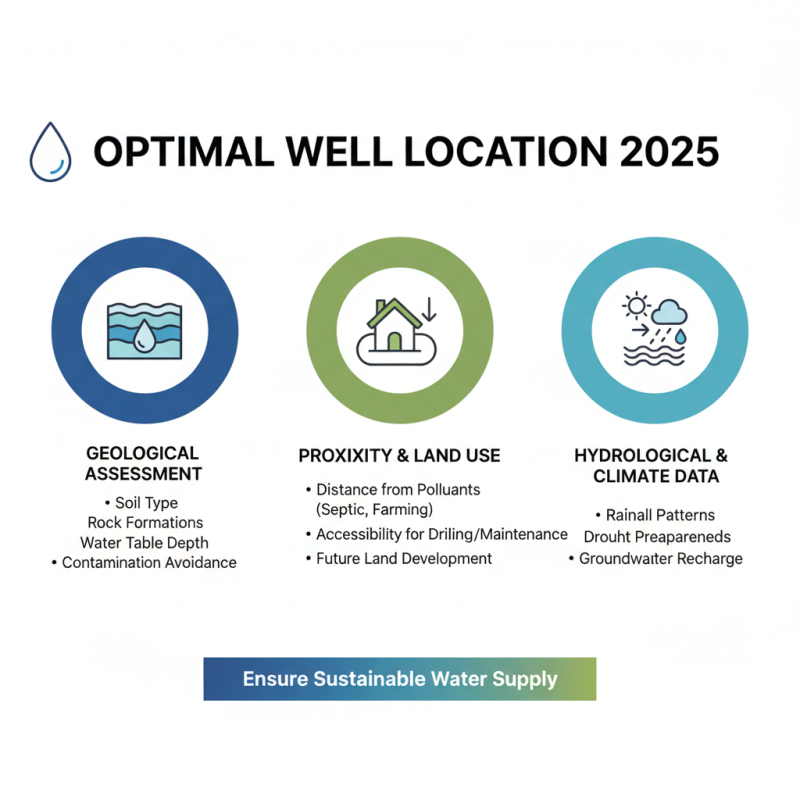
When selecting the best well location in 2025, several critical factors must be taken into account to ensure optimal performance and sustainability. Firstly, assess the geological characteristics of the site. Understanding the soil type, rock formations, and water table depth will guide you in identifying the areas with the most abundant and clean water supply. Conducting thorough geological surveys can provide valuable data to avoid locations that may lead to contamination or dryness.
Another essential consideration is proximity to potential contaminants. It’s crucial to position your well away from sources of pollution, such as agricultural runoff, septic systems, and industrial activities. Evaluating local land use and nearby facilities will help mitigate the risk of contamination. Additionally, think about accessibility for installation and maintenance; choosing a site that allows for easy access can significantly reduce long-term operational challenges. The integration of advanced technology such as satellite imagery can also provide insights into environmental conditions that could affect your well.
Evaluating Different Types of Pumps for Optimal Performance
When selecting the best pump systems for well water management in 2025, understanding the different types of pumps available is essential for optimal performance. Submersible pumps are often favored for their efficiency and ability to operate underwater, making them a top choice for deep well applications. These pumps push water to the surface and can handle high volumes with minimal energy consumption. Their design also protects them from surface contaminants, ensuring a cleaner water supply.
On the other hand, jet pumps are ideal for shallower wells and are often easier to install and maintain. They work by creating a vacuum that draws water up from the well, which can be advantageous when space and accessibility are limited. However, jet pumps may struggle with higher depths compared to submersible options. It’s crucial to evaluate the specific requirements of your well, including depth, water quality, and flow rate, to determine the most suitable pump type. Proper assessment and selection of the right pump ensure long-term efficiency, reduced energy costs, and reliable access to water, contributing significantly to the sustainability and functionality of your water system in the coming years.
Comparison of Different Pump Types for Well Systems in 2025
Assessing Water Quality and Quantity Needs for Well Systems
When selecting the best well and pump systems, understanding your specific water quality and quantity needs is essential. Start by assessing the source of your groundwater, which can vary widely based on geographic location. Conducting tests for contaminants such as bacteria, heavy metals, and minerals will help determine the water quality. This information is crucial for deciding whether a filtration system or water treatment solution is necessary to ensure safe consumption and usability.
Once water quality is established, it’s important to evaluate your water quantity needs. This involves calculating the total daily water requirement for your residential or agricultural use. Consider factors such as the number of occupants, appliances relying on water, and irrigation needs. Knowing your peak demand times can also guide you in selecting a pump system with adequate flow rates and pressure, ensuring that your household's or farm's water demands are met consistently. Balancing these aspects will lead you to a well and pump system that not only fulfills your immediate needs but also offers sustainability for future growth.
Future Trends in Well and Pump Technology for Homeowners
As homeowners look to the future, the integration of advanced technologies into well and pump systems is becoming increasingly vital. In 2025, innovations such as smart sensors and remote monitoring will transform how homeowners manage their water systems. These technologies not only enhance efficiency but also provide real-time data on water levels and pump performance, allowing for proactive maintenance and immediate alerts in case of anomalies. This shift towards smart solutions will empower homeowners to make informed decisions, reduce wastage, and ultimately lower operational costs.
Additionally, sustainable practices and eco-friendly materials are anticipated to gain traction in the well and pump industry. Homeowners are becoming more environmentally conscious, prompting manufacturers to focus on energy-efficient pumps and systems that utilize renewable energy sources. Rainwater harvesting systems, coupled with advanced filtration technologies, will create a more resilient water supply while minimizing reliance on traditional sources. As homeowners embrace these future trends, they will not only enhance their own water management but also contribute to broader environmental sustainability efforts.
Top Tips for Choosing the Best Well and Pump Systems in 2025 - Future Trends in Well and Pump Technology for Homeowners
| Feature |
Description |
Trend Level in 2025 |
Energy Efficiency |
| Smart Monitoring |
Remote monitoring systems for real-time data on water levels and pump performance. |
High |
Yes |
| Solar-Powered Pumps |
Eco-friendly pumps that utilize solar energy to reduce electricity costs. |
Very High |
Exceptional |
| Variable Frequency Drives (VFDs) |
Allows pumps to adjust performance based on demand, enhancing efficiency. |
High |
Yes |
| Submersible Pumps |
Discreet, underwater pumps that minimize noise and improve efficiency. |
Moderate |
Yes |
| Non-Clogging Pumps |
Specifically designed to handle debris and solids without jamming. |
Increasing |
Moderate |