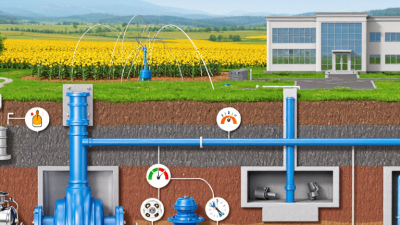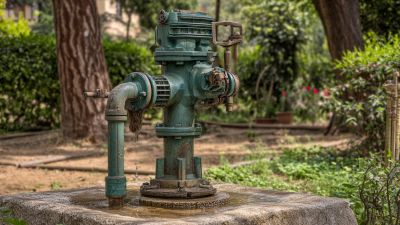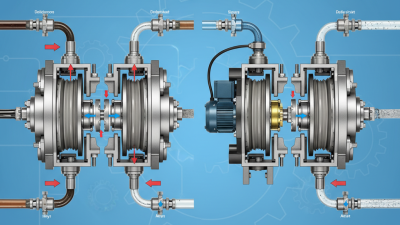
Reliable well and pump systems now sit at the center of water security, agriculture, and industrial growth. The WHO and UNICEF Joint Monitoring Programme reported that 2.2 billion people lacked safely managed drinking water in 2022. That figure gives this market real urgency. It also exposes a difficult truth. Equipment availability does not guarantee dependable water access.
China has become a major manufacturing base for submersible pumps, deep-well pumps, solar pumps, and irrigation systems. Global buyers, however, should assess more than factory capacity or attractive pricing. Motor efficiency, hydraulic performance, corrosion resistance, testing records, spare-parts access, and export experience require careful comparison. The International Energy Agency estimates that water services consume significant electricity worldwide, making efficient pump selection increasingly important. The 2023 United Nations World Water Development Report also links water demand growth with stronger pressure on infrastructure and resources.
Dr. Peter Gleick, co-founder of the Pacific Institute, has stated, “Water is a basic human right.” His view helps explain why well and pump sourcing carries practical and social importance. A pump that fails in a remote village can stop drinking-water access, irrigation, or livestock production within hours. That detail is easy to overlook. So is after-sales support.
This guide examines leading Chinese well and pump manufacturers for global buyers. It considers certifications, production experience, application range, quality controls, and communication reliability. Rankings can never fit every project. Local geology, voltage standards, water chemistry, and installation skills still matter. Buyers should verify current test data directly, because published specifications may vary between markets and product batches.
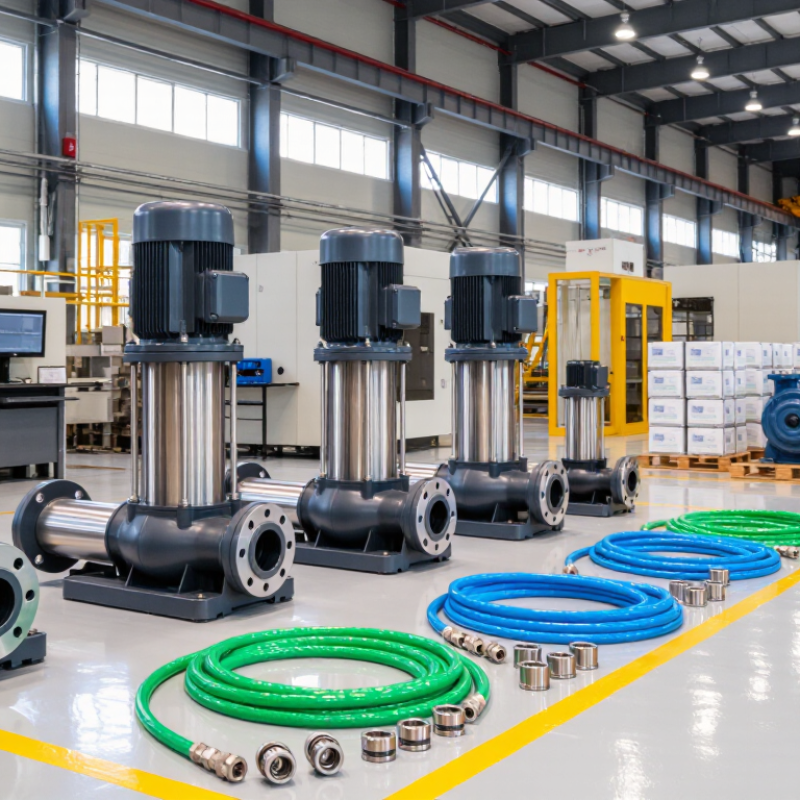
China’s well and pump manufacturers are industrial producers that design, assemble, and test equipment for water extraction and movement. Their products may include deep-well pumps, submersible pumps, centrifugal pumps, pressure systems, and drilling-related components. Some factories manufacture complete systems. Others produce motors, impellers, casings, or control panels for larger equipment suppliers.
A reliable manufacturer should explain flow rate, pump head, power requirements, materials, and operating limits clearly. Factory experience matters, especially when pumps must work in sandy water, narrow wells, or demanding agricultural conditions. During supplier evaluations, request test reports, material details, production photos, and sample units. Check whether quality control covers winding, insulation, sealing, vibration, and final performance. A polished catalog is not enough. I have learned that small specification gaps can create expensive installation problems. Certifications should also match the destination market and product category.
Tips: Confirm the well diameter before ordering. Compare actual operating data, not only maximum performance. Ask how spare parts are identified and packed. A useful supplier should answer technical questions directly, even when the answer is inconvenient. Keep written records of drawings, tolerances, inspection results, and agreed testing methods. Independent inspection can add confidence, but it cannot replace careful specification review.
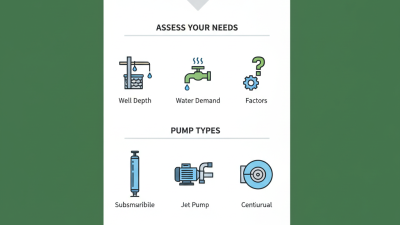
This chart compares indicative well-depth ranges commonly served by major pump categories available from Chinese manufacturers. Actual performance depends on pump design, flow rate, water level, installation conditions, and the manufacturer's technical specifications. The ranges reflect commonly used engineering applications, including WHO/UNICEF guidance for handpumps and standard industry specifications for jet, submersible, and vertical turbine pumps.
China’s leading well and pump makers are best classified by capability, not factory size alone. This matters because the United Nations World Water Development Report 2024 states that agriculture represents about 70% of global freshwater withdrawals. Buyers therefore need different equipment for irrigation, municipal supply, mining, and deep-well extraction.
The first group supplies standard centrifugal and submersible pumps for farms, buildings, and general water transfer. The second group focuses on engineered systems, including high-head units, corrosion-resistant materials, variable-speed drives, and customized well assemblies. A smaller, more advanced group supports demanding projects with hydraulic testing, digital monitoring, energy analysis, and documented quality control. These categories often overlap.
Performance evidence should guide classification. ISO 9906 testing helps verify flow, head, and efficiency under defined conditions. ISO 9001 certification indicates a quality management system, but it does not guarantee excellent field performance. The International Energy Agency has repeatedly highlighted motor-system efficiency as a major industrial energy opportunity, making power consumption an important comparison point.
Export experience forms another useful category. Check multilingual manuals, spare-parts planning, factory test records, and local service arrangements. Look closely. A polished catalog can conceal weak after-sales support. Certification marks may also cover only selected models, not every pump offered. In practice, classification is imperfect, and buyers should compare test data, warranty terms, operating conditions, and five-year energy costs before choosing a supplier.
Chinese well and pump manufacturers offer a broad product range for agricultural, municipal, construction, and industrial projects.
Common options include deep-well submersible pumps, stainless-steel borehole pumps, centrifugal pumps, self-priming pumps, jet pumps, drainage pumps, and sewage pumps.
Many suppliers also produce solar-powered pumping systems, pressure tanks, control panels, float switches, and variable-frequency drives.
Selection should match the water depth, flow rate, head pressure, voltage, and water quality.
For example, a narrow borehole may require a slim submersible pump, while muddy construction water needs stronger drainage equipment.
According to the International Energy Agency, water supply and wastewater services consume about 4% of global electricity.
Efficient motors and properly sized impellers therefore affect operating costs, not only purchase prices. Ask for pump curves, motor efficiency data, material specifications, and tested performance records.
A factory catalogue is not enough.
Buyers should verify casing materials, cable length, seal design, spare-part availability, and local certification requirements.
The U.S. Department of Energy reports that pumping systems can represent roughly 25% of industrial electricity use.
That figure makes control systems worth reviewing. Yet efficiency claims can be optimistic. Independent testing is safer.
Even a small mismatch between rated head and actual site conditions may cause overheating, weak flow, or repeated maintenance.
Global buyers should evaluate Chinese well and pump manufacturers through evidence, not impressive websites or quick quotations. Check the factory’s production capacity, quality controls, and experience with similar well depths, flow rates, and water conditions. Request performance curves, material specifications, inspection records, and recent test results. These documents should match the exact model being offered.
Tips: Ask for a live video inspection of machining, assembly, and testing areas. Confirm serial-number traceability. Contact two verified customers, if possible. Also check whether certifications match your destination market, voltage, and installation requirements.
A reliable supplier explains limitations clearly. They should discuss corrosion risks, motor protection, spare parts, delivery terms, and warranty procedures before payment. Sample testing can reveal noise, vibration, starting current, and actual flow under pressure. Do not rely only on laboratory figures. Site conditions may differ. A polished factory tour can still hide weak after-sales support, and a low price may reflect thinner materials or incomplete testing. This is where evaluation often becomes uncomfortable. Buyers should record every technical promise in the contract, including tolerances, inspection rights, packaging details, and response times. English communication matters too, but precise drawings matter more. Suppliers deserve fair questions, while buyers must avoid unrealistic specifications.
International well and pump purchases are governed by destination-country rules, contract specifications, and recognized technical standards. No single global certificate covers every installation. Buyers should match the pump to its duty point: flow, head, fluid temperature, solids, voltage, and operating hours. ISO 9906 can guide hydraulic performance testing, while ISO 9001 supports quality management rather than pump performance. That distinction matters. It is often missed.
For potable-water applications, materials need approval under the importing market’s rules. NSF/ANSI/CAN 61 is widely used in North America for drinking-water system components. European projects may require CE marking, supported by applicable electrical, EMC, and safety requirements. IEC 60034 is relevant to rotating electrical machines, and IEC 60529 defines enclosure protection ratings such as IP55. These references do not replace local inspection or well-construction codes. Check documents with a qualified engineer.
A reliable purchase file should include certified pump curves, motor data, material certificates, dimensional drawings, test records, and a clear warranty. Request a factory acceptance test when downtime is costly. Independent inspection can verify serial numbers, insulation resistance, rotation, vibration, and measured flow. Do not accept “IP65” as proof of suitability for every site. The rating concerns enclosure protection, not corrosion resistance or submersible depth. In practice, paperwork can look complete while the duty point remains unclear. Recheck assumptions before signing; a small voltage mismatch can damage equipment and delay commissioning.
| Purchase Dimension | Relevant International Standard or Regulation | What It Covers | Recommended Buyer Evidence | Typical Application |
|---|---|---|---|---|
| Hydraulic performance | ISO 9906:2012 Rotodynamic pumps — Hydraulic performance acceptance tests |
Defines test methods, measurement conditions, tolerances and acceptance grades for flow rate, head, power and efficiency. | Witnessed or independently verified performance test report showing the agreed duty point and acceptance grade. | Submersible well pumps, centrifugal pumps, irrigation systems and water-supply projects. |
| Pump design and pressure casing | ISO 5199:2002 Technical specifications for centrifugal pumps, Class II |
Addresses design requirements for centrifugal pumps, including construction, inspection, testing and documentation. | Approved technical drawings, material certificates, pressure-test records and inspection plans. | Industrial water transfer, process water and demanding commercial installations. |
| Motor electrical safety | IEC 60034-1 Rotating electrical machines — Rating and performance |
Covers ratings, operating conditions, temperature-rise limits, testing and performance requirements for rotating motors. | Motor datasheet, routine test report, insulation test results and declared voltage, frequency and duty rating. | Three-phase and single-phase well-pump motor assemblies. |
| Ingress protection | IEC 60529 Degrees of protection provided by enclosures (IP Code) |
Classifies protection against solid objects and water ingress using IP ratings such as IP54, IP55 and IP68. | Test report or certificate identifying the exact model, enclosure configuration and tested IP rating. | Outdoor control panels, submerged motors and wet or dusty pumping environments. |
| Drinking-water contact materials | NSF/ANSI/CAN 61 Drinking Water System Components — Health Effects |
Evaluates the potential health effects of materials and components that contact drinking water. | Valid certification or laboratory evaluation for the exact wetted materials and intended use. | Potable-water wells, municipal water systems and drinking-water booster installations. |
| Electrical equipment conformity | IEC 60204-1 Safety of machinery — Electrical equipment of machines |
Provides requirements for electrical equipment, control circuits, protection, wiring, disconnecting and documentation. | Electrical schematics, protective-device specifications, control-panel inspection records and conformity documentation. | Packaged pumping skids and systems supplied with control cabinets. |
| Energy efficiency | IEC 60034-30-1 Efficiency classes for line-operated AC motors |
Defines efficiency classes for many line-operated AC motors, including IE1, IE2, IE3 and IE4 categories where applicable. | Motor nameplate, efficiency data at specified loads and test method used for the declared efficiency class. | Continuous-duty irrigation, industrial and municipal pumping. |
| Mechanical vibration | ISO 20816-3 Measurement and evaluation of machine vibration |
Establishes general conditions and procedures for measuring and evaluating vibration on industrial machines. | Factory vibration report with measurement locations, speed, load condition and acceptance limits. | Large centrifugal pumps, vertical pumps and critical water infrastructure. |
| Quality-management system | ISO 9001:2015 Quality management systems |
Sets requirements for a quality-management system, including process control, corrective action and continual improvement. | Current certificate issued by an accredited certification body and verification of its scope and validity. | Supplier qualification for export orders and repeat procurement programs. |
| Environmental management | ISO 14001:2015 Environmental management systems |
Provides a framework for managing environmental responsibilities, legal obligations and environmental risks. | Current certificate, stated certification scope and evidence of environmental compliance where contractually required. | Public-sector tenders and projects with environmental supplier requirements. |
| Export-market electrical compliance | Destination-country requirements Examples include CE marking under applicable EU legislation and UKCA requirements where applicable |
Determines whether the complete supplied product meets the legal safety, electromagnetic compatibility and documentation requirements of the destination market. | Declaration of conformity, technical file information, applicable test reports and correct product labeling. | Pumps, motors and control systems exported to regulated markets. |
| Hazardous-area suitability | IEC 60079 series Explosive atmospheres |
Covers design, testing and certification requirements for equipment intended for explosive atmospheres. | Valid hazardous-area certificate showing protection concept, gas or dust group, temperature class and equipment category. | Oil and gas facilities, chemical plants and other classified locations. |
| Installation compatibility | Project and local plumbing requirements Applicable national codes, water-authority rules and electrical regulations |
Controls pipe connections, cable systems, earthing, pressure protection, backflow prevention and installation practices. | Approved drawings, connection dimensions, installation manual and written confirmation of local-code compatibility. | Borehole systems, booster sets, agricultural wells and municipal installations. |
Note: The applicable requirements depend on the pump type, fluid, installation environment, destination country and project specifications. Buyers should verify the current edition of each standard and request documentation for the exact supplied model.