Selecting top pump direct suppliers requires more than comparing catalogue prices. Global buyers must examine hydraulic performance, material quality, certification, lead times, and after-sales support. A pump that looks affordable may consume excessive energy or fail early. The U.S. Department of Energy’s Improving Pumping System Performance sourcebook notes that pumping systems can represent a substantial share of industrial energy use, especially in facilities with continuous operation. Small efficiency gaps matter. They become large costs after thousands of operating hours.
Market data also shows why supplier selection is becoming more technical. Fortune Business Insights estimated the global industrial pumps market at approximately USD 66.81 billion in 2023. Its report expects continued growth through 2032, driven by water treatment, energy, chemicals, and infrastructure investment. These figures describe opportunity, not automatic supplier quality. Buyers still need verified test curves, documented factory controls, traceable materials, and realistic delivery commitments. The details are often less polished than the sales brochure.
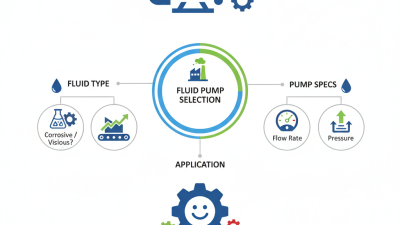
Pump specialist Lev Nelik has emphasized, “A pump is only one part of the system.” That principle should guide every pump direct comparison. Supplier evaluation should include the complete duty point, including flow, head, fluid temperature, viscosity, solids, and control method. It should also consider lifecycle cost, spare-parts access, commissioning support, and regional service capability. No shortlist is perfect. Some buyers may overvalue certifications while overlooking maintenance response. Others may choose the lowest quotation and regret the decision later. This guide examines leading pump direct suppliers through practical evidence, technical suitability, and transparent buyer checks.

Pumping systems can consume 25–50% of industrial motor energy. The range is broad, but the impact is real. A pump running eight thousand hours yearly can quietly dominate a plant’s electricity bill. Oversized motors, throttled valves, clogged strainers, and poor pipe design often create this waste. The pump may appear reliable. Its operating point may still be wrong.
Direct suppliers should provide more than a product quotation. Global buyers need verified performance curves, efficiency data, material specifications, and motor compatibility. Ask for results at the actual duty point, not only the best efficiency point. A 90-kilowatt pump may look efficient on paper, yet lose energy when forced through an undersized discharge line. Variable-speed control can help, but it is not automatically the best choice. Controls also require correct programming and maintenance.
Site conditions deserve equal attention. Water chemistry, temperature, suspended solids, voltage, and installation altitude can change performance. Request seal details, spare-part availability, inspection records, and clear warranty terms. Suppliers with engineering support can review pipe friction and operating patterns before shipping equipment. That step prevents expensive guesswork.
Field assessments often reveal an uncomfortable truth: purchasing price receives more attention than lifetime energy cost. This is a mistake, though not an uncommon one. A supplier should explain assumptions openly and admit performance limits. Buyers should compare annual energy use, service access, and downtime risks beside the initial quote. Some decisions still remain uncertain. Real operating data should challenge the original design.
Global buyers should compare supplier models before comparing prices. OEM suppliers build pumps to an established specification, including flow rate, head pressure, materials, and motor requirements. This model suits repeat orders and controlled product designs. Buyers should request test reports, production tolerances, and sample units before signing a large contract. Small differences in impeller balance can create noticeable vibration.
ODM suppliers offer a developed pump platform with adjustable features. Buyers may change labels, connection sizes, control panels, or packaging. This approach can reduce development time, but customization still needs technical review. Ask for drawings, performance curves, inspection procedures, and spare-parts lists. A polished sample can hide weak internal components.
Factory-authorized distributors provide another route. They usually offer verified product access, technical guidance, and clearer warranty procedures. Their prices may be higher than direct factory quotes, yet support can reduce costly delays. Check authorization documents, shipment records, and after-sales response times. Do not assume every distributor understands industrial applications. That assumption can fail. Even experienced buyers sometimes focus too heavily on unit cost. A better assessment includes service capacity, documentation quality, replacement-part availability, and communication during a real installation problem.
Top Pump Direct Suppliers for Global Buyers?
A reliable direct supplier should prove pump performance, not only publish a polished curve. ISO 9906 testing verifies flow, head, efficiency, and power under controlled conditions. Ask for the selected acceptance grade and test uncertainty. A calibrated flow meter, pressure gauges, and stable water temperature matter. During a witnessed test, the pump should reach agreed duty points near its best efficiency point. Small deviations can affect energy costs and operating stability.
API 610 adds stricter expectations for centrifugal pumps used in demanding industrial services. Buyers should review the specified design, materials, rotor dynamics, vibration limits, mechanical seals, and factory testing procedures. The supplier should provide test records with serial numbers, instrument calibration dates, and raw readings. A professional review also compares the actual curve with the certified curve. Curves can look convincing while hiding an unsuitable margin. That deserves attention.
Tips: Request a test procedure before placing the order. Confirm whether ISO 9906 acceptance applies to the complete pump or a tested model. For API 610 projects, align every exception with the technical specification. Inspect the test facility when practical. Bring an experienced engineer. Even careful evaluations have blind spots. Reflect on unclear assumptions before approval. This habit often reveals missing NPSH data, unrealistic operating points, or documentation gaps that later become expensive.
ISO 9906 Grade 2 reference limits are shown as maximum acceptance deviations from the guaranteed duty point. API 610 projects define the applicable test procedure, guarantee points, and contractual acceptance criteria.
Reference basis: ISO 9906 acceptance testing for centrifugal pumps. Flow and head are assessed against the guaranteed point; power is an upper limit and efficiency is a lower limit. The purchase specification remains the controlling document for API 610 compliance.
Direct pump suppliers should be compared through operating evidence, not attractive catalog claims. Efficiency depends on flow, head, motor input, and actual working conditions. Ask for pump curves and test data at your required duty point. A small difference in efficiency can increase electricity costs across a year. Check the details.
MOQ can affect cash flow and inventory risk. Some suppliers accept one trial unit, while others require a full production batch. A low MOQ sounds helpful, but unit prices may rise sharply. Confirm whether spare seals, impellers, and control parts follow the same quantity rule.
Lead time should include production, inspection, packing, and export preparation. Request a written schedule with approval milestones. A quoted ten-day lead time may exclude testing or port delays. That gap matters.
Warranty terms need equal attention. Check coverage length, response time, replacement procedures, and excluded wear parts. Reliable suppliers usually provide serial-number tracking, inspection records, and clear service contacts. Ask how failures are verified and who pays return freight. Warranty language can still be vague.
A practical comparison sheet should record efficiency results, MOQ, realistic lead time, and every warranty condition before an order is placed.
Global buyers need more than a competitive pump quotation. A reliable direct supplier should explain certification, operating limits, and service conditions clearly. CE marking supports applicable European requirements, while UL approval may matter for specific North American installations. ATEX compliance is essential where explosive atmospheres create additional equipment risks. These marks are not interchangeable. Their validity depends on the pump design, motor, control panel, and intended environment.
Ask for certificates, technical files, test reports, and traceable serial numbers before placing an order. Experienced suppliers should also confirm fluid temperature, viscosity, pressure, flow rate, and installation location. A stainless-steel pump moving clean water may require different protection from one handling abrasive chemicals. Details matter. Small omissions can delay customs clearance or create costly site modifications.
Variable-speed drives can reduce energy use by 20–50% in suitable applications, especially when demand changes during the day. The actual saving depends on system resistance, control settings, motor efficiency, and operating hours. It is not an automatic guarantee. A useful supplier can provide a comparison using measured flow and pressure data. We have seen savings estimates fail when operators left valves partly closed or ignored maintenance. That lesson remains important. Direct communication, documented testing, and realistic calculations make global pump sourcing more dependable.
| Direct-Supplier Profile | Typical Pump Types | Common Applications | Global Compliance to Request | Variable-Speed Compatibility | Potential Energy Saving | Buyer Verification Points |
|---|---|---|---|---|---|---|
| Industrial centrifugal pump manufacturer | End-suction, split-case, multistage, and process centrifugal pumps | Water transfer, cooling systems, irrigation, process circulation, and utilities | CE conformity for applicable EU products; UL-listed components or assemblies where specified; ATEX versions for designated explosive atmospheres | Usually suitable with a correctly sized variable-frequency drive, motor, control panel, and minimum-flow protection | Approximately 20–50% in suitable variable-flow systems | Request certified performance curves, motor efficiency class, duty-point confirmation, noise data, spare-parts support, and factory test records |
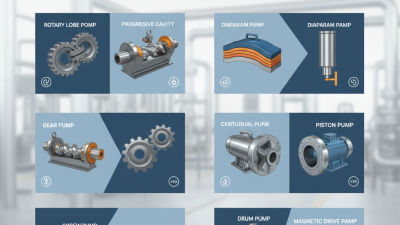
| Chemical and process pump specialist | Magnetic-drive, sealless, lined, diaphragm, and progressing-cavity pumps | Corrosive chemicals, solvents, wastewater, dosing, filtration, and process transfer | CE documentation where applicable; ATEX category and equipment-group suitability for hazardous zones; electrical components may require UL recognition or listing for the destination market | Available on many models, subject to seal, diaphragm, elastomer, temperature, and torque limitations | Typically application-dependent; 20–50% may be achievable where flow demand varies substantially | Verify chemical compatibility, hazardous-area documentation, dry-run limits, containment design, pulsation control, and materials traceability |
| Building-services and HVAC pump supplier | Inline, close-coupled, vertical multistage, and circulator pumps | Heating, chilled water, air-conditioning, pressure boosting, and building water systems | CE-marked configurations for applicable European markets; UL or other local approvals when required by the project; ATEX generally applies only to specifically classified installations | Strong fit for proportional-pressure, constant-pressure, and temperature-controlled operation | Often 20–50% compared with fixed-speed throttled operation, depending on load profile | Check seasonal efficiency, control modes, sensor compatibility, motor efficiency, commissioning support, and hydraulic balance requirements |
| Hazardous-area pump integrator | Process centrifugal, positive-displacement, barrel, and packaged skid pumps | Oil and gas, petrochemical, solvent handling, paint, gas processing, and classified production areas | ATEX 2014/34/EU documentation where applicable; IECEx or local hazardous-area approval may be required; CE and UL requirements depend on equipment and destination | Possible with certified motor, drive, instrumentation, cable glands, and system design suitable for the hazardous area | No fixed guarantee; savings depend on process demand, control strategy, and hazardous-area equipment selection | Confirm zone, equipment category, gas or dust group, temperature class, certificate scope, inspection requirements, and installation method |
| Water and wastewater equipment supplier | Submersible, dewatering, sewage, axial-flow, and dry-pit pumps | Municipal wastewater, stormwater, drainage, sludge transfer, and flood control | CE documentation for applicable products; UL requirements according to installation and authority having jurisdiction; ATEX options for classified wastewater environments | Suitable when the motor, cable, cooling arrangement, and pump operating range support speed control | Potentially 20–50% in variable-inflow installations after correct system optimization | Review solids passage, clog resistance, minimum submergence, wet-well control logic, corrosion protection, lifting equipment, and service access |