
What Are the Top HVAC Oil Pump Suppliers in China?
Choosing the right Hvac Oil Pump supplier in China requires more than comparing online prices. Buyers need stable performance, accurate specifications, and dependable after-sales support. This guide introduces leading supplier types and explains how to assess their real manufacturing capability.
Experienced suppliers usually provide detailed pump curves, material data, and application guidance. Their teams should understand oil viscosity, operating temperature, pressure requirements, and compressor compatibility. A reliable factory can show production samples, inspection records, and practical testing procedures. Ask whether each pump is tested for leakage, noise, flow stability, and continuous operation.
Factory visits can reveal important details. Look for clean assembly areas, calibrated measuring tools, traceable components, and technicians checking seals by hand. ISO 9001 certification may support confidence, but it should not replace independent verification. Some suppliers offer OEM labeling and customized ports. Others focus on standard models with faster delivery.
No supplier is perfect. A polished website proves little. Even a technically strong manufacturer may communicate slowly or misunderstand a special requirement. Buyers should request samples before placing large orders. Compare actual pump performance with the datasheet, not only the quotation. Check packaging, export experience, warranty terms, and replacement procedures as well.
This article evaluates China’s top Hvac Oil Pump suppliers through practical purchasing criteria. It considers product quality, engineering support, production capacity, customization, and service reliability. The rankings may change as factories improve or markets shift. Careful verification remains essential.
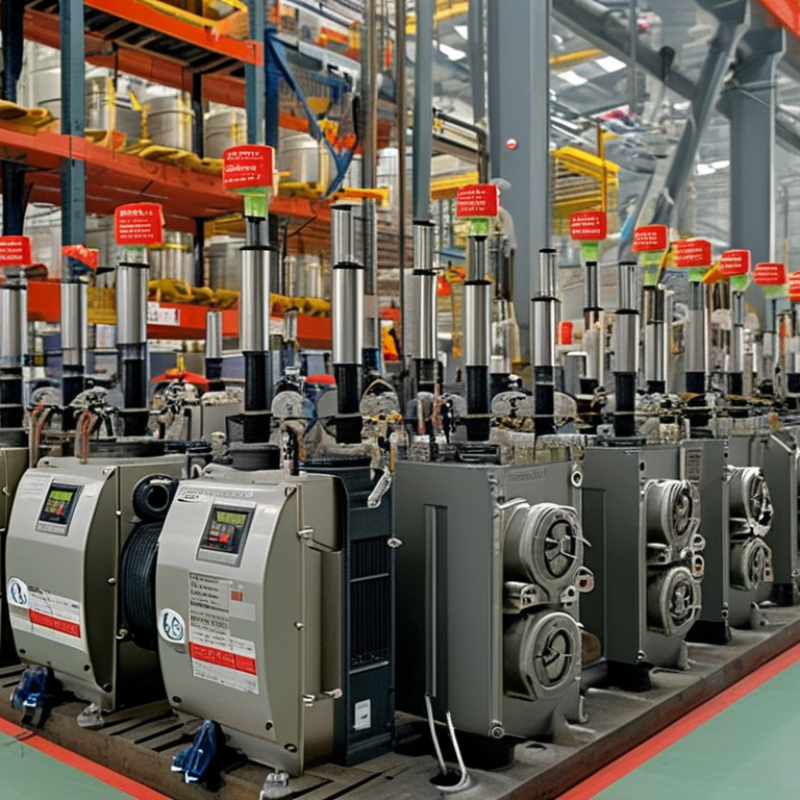
China HVAC Oil Pump Supplier Landscape: 2024 Demand, Applications, and Export Scope
China HVAC Oil Pump Supplier Landscape: 2024 Demand, Applications, and Export Scope
China’s HVAC oil pump market is supported by compressor production, commercial cooling, heat pumps, and industrial chillers. The International Energy Agency’s 2024 energy-efficiency analysis expects global cooling demand to keep rising as incomes and temperatures increase. China remains a major manufacturing base for air-conditioning equipment, creating steady demand for compact gear, rotary, and positive-displacement oil pumps. Supplier strength is usually measured through machining accuracy, flow stability, noise control, and endurance testing. Not only price.
The strongest Chinese suppliers typically serve compressor makers, refrigeration contractors, and export-oriented equipment factories. Their products often support screw compressors, semi-hermetic systems, cold storage units, and large building chillers. However, trade statistics require caution. China Customs and UN Comtrade classify many pumps under broad HS codes, so HVAC oil pump exports cannot be isolated with complete accuracy. This makes supplier comparisons less precise than advertised. A practical review should check factory testing records, oil-temperature performance, seal life, spare-parts availability, and export documentation. ISO 9001 systems help, but they do not replace field evidence. In 2024, demand also shifted toward energy-saving heat pumps and variable-speed equipment, according to market reviews from the China Refrigeration and Air-Conditioning Industry Association. Export scope is broad across Asia, Europe, the Middle East, and Latin America, yet local voltage, refrigerant, efficiency, and safety requirements still affect final selection. Supplier directories can look impressive. Factory audits remain necessary.
| Supplier Segment | Typical Pump Category | 2024 Demand Level | Main HVAC Applications | Typical Technical Range | Common Export Destinations | Relevant Compliance and Documentation |
|---|---|---|---|---|---|---|
| HVAC Service Equipment Suppliers | Single-stage and two-stage rotary-vane vacuum pumps | High Supported by installation, servicing, and refrigerant recovery activities | Split air conditioners VRF systems Heat pumps Commercial refrigeration | Nominal flow commonly about 1.5–14 CFM; two-stage models can reach an ultimate vacuum close to 0.3 Pa under specified test conditions | Southeast Asia, Europe, North America, the Middle East, Latin America, and Australia | CE for applicable European-market products, electrical safety test reports, user manuals, vacuum performance data, and export packaging documentation |
| Refrigeration Compressor Component Suppliers | Positive-displacement gear, gerotor, or vane oil pumps | High Demand linked to compressor production and replacement components | Scroll compressors Semi-hermetic compressors Screw compressors Condensing units | Model-specific flow and pressure; commonly engineered for continuous lubrication, oil circulation, and bearing or shaft-seal protection | East Asia, Europe, North America, India, Southeast Asia, and regional compressor assembly markets | Dimensional inspection records, material certificates, leakage tests, flow testing, traceability records, and customer-specific quality approvals |
| Heat Pump and Chiller Component Suppliers | Compact lubrication pumps and oil-circulation modules | High Benefiting from electrification and heat-pump adoption | Air-source heat pumps Water-source heat pumps Industrial chillers District cooling equipment | Designed for stable oil delivery across varying compressor speeds; motor, seal, viscosity, and refrigerant-oil compatibility are key selection criteria | Europe, North America, Japan, South Korea, Australia, and emerging heat-pump markets in Southeast Asia | Performance curves, endurance-test results, EMC documentation where applicable, RoHS or REACH declarations, and environmental operating specifications |
| Commercial Refrigeration Equipment Suppliers | Oil pumps, oil-return pumps, and oil-management assemblies | Medium to High Demand varies with compressor size and system architecture | Cold rooms Supermarket systems Food processing Transport refrigeration | Products are selected according to oil viscosity, refrigerant type, pressure differential, temperature range, and required oil-return rate | Southeast Asia, the Middle East, Africa, Latin America, Europe, and domestic Chinese equipment production | Pressure and leakage tests, temperature-cycle testing, oil compatibility information, packaging specifications, and batch inspection reports |
| Industrial Refrigeration Component Suppliers | Heavy-duty gear pumps and customized oil-lubrication packages | Medium Lower volume but higher customization and application requirements | Ammonia refrigeration Process cooling Large screw compressors Cold-chain facilities | Requires application-specific pressure, flow, material, seal, and temperature selection; continuous-duty operation is typical | Southeast Asia, the Middle East, Central Asia, Europe, South America, and industrial projects in Africa | Material certificates, pressure-test records, welding or fabrication documentation where applicable, maintenance instructions, and project inspection plans |
| OEM and Private-Label Pump Suppliers | Customized electric oil pumps, pump modules, and service-tool assemblies | High Frequently used by overseas equipment assemblers and distributors | OEM compressor packages Service stations Portable HVAC tools Replacement parts | Customization commonly covers voltage, frequency, connector type, mounting dimensions, flow rate, housing material, and labeling | Europe, North America, Southeast Asia, the Middle East, Latin America, and Africa | Private-label artwork, inspection specifications, product drawings, sample approval records, carton marks, barcode data, and export certificates |
| Aftermarket Replacement Suppliers | Replacement rotary-vane, gear, and compact oil pumps | High Driven by installed-equipment maintenance and repair demand | Vacuum pump repair Compressor servicing Refrigeration maintenance HVAC contractor tools | Selection is generally based on interchangeability, mounting dimensions, shaft geometry, voltage, flow, vacuum level, and seal compatibility | Online distribution channels and wholesalers in Europe, North America, Australia, Southeast Asia, and the Middle East | Cross-reference charts, installation instructions, spare-part lists, warranty terms, packaging tests, and basic electrical or mechanical inspection reports |
| Precision and Custom Engineering Suppliers | Application-specific micro-pumps and integrated oil-management systems | Medium Smaller volumes with longer qualification cycles | Variable-speed compressors Electronic expansion systems Energy-efficient chillers Specialty refrigeration | Development focuses on low noise, compact dimensions, motor efficiency, controllability, low-temperature starting, and long service life | Japan, South Korea, Germany, Italy, the United States, and specialized equipment markets worldwide | Design validation plans, reliability testing, failure-mode analysis, engineering change control, RoHS or REACH declarations, and full product traceability |