Top 10 Types of Motor Pumps for Global Buyers
Choosing the right motor pump can shape a project’s efficiency, maintenance cost, and service life. Global buyers face many options, including centrifugal, submersible, diaphragm, gear, piston, screw, vane, regenerative, axial-flow, and self-priming models. Each design moves liquid differently. Each also performs best under specific conditions.
Dr. Lev Nelik, a recognized pump-system specialist, states, “A pump does not operate alone; it operates within a system.” This practical view matters. Flow rate, total head, liquid viscosity, temperature, solids, power supply, and installation depth must be checked together. A compact centrifugal motor pump may suit clean water and stable pressure. A diaphragm model may handle chemicals or abrasive fluids more safely. A submersible unit can simplify drainage, but seal failure remains a real concern.
This guide examines the top 10 types of motor pump for global buyers. It compares operating principles, common applications, advantages, limitations, and selection factors. Real purchasing decisions are rarely perfect. A catalog rating may not match field conditions. Energy data may also look attractive until maintenance and downtime are included. Therefore, buyers should review certified performance curves, materials, warranty terms, spare-parts access, and local technical support. Small details matter. A mismatched seal, weak cable, or undersized motor can turn a low-price purchase into an expensive problem. The aim is not to declare one universal winner, but to help readers choose a dependable motor pump for a clearly defined duty.
What Motor Pumps Are and How They Work
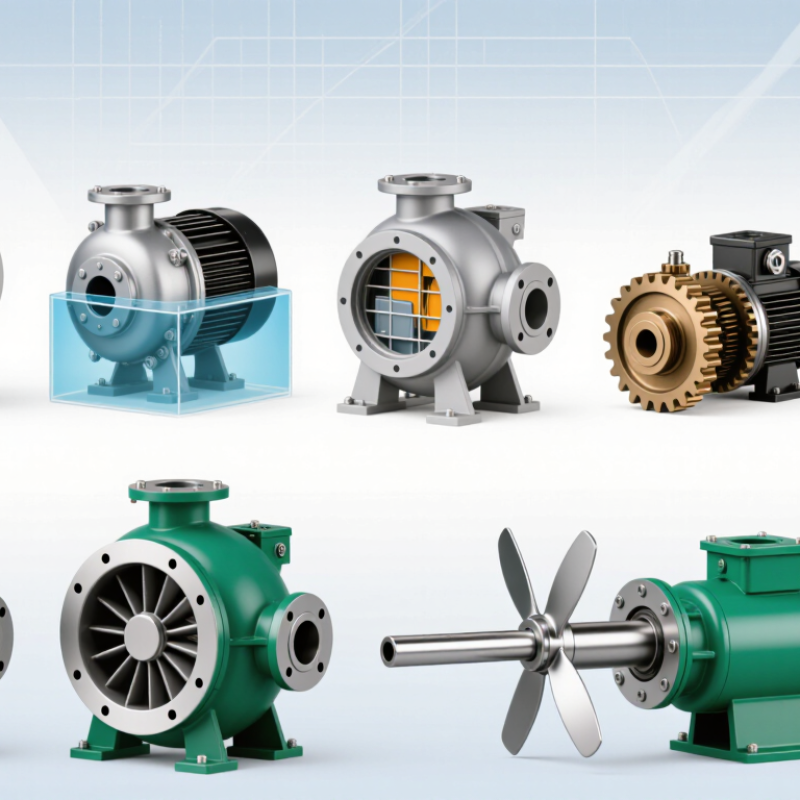
Motor pumps convert mechanical energy into fluid movement. A motor supplies torque, while the pump creates pressure and flow. In a centrifugal design, an impeller accelerates liquid outward. Casing geometry then converts velocity into pressure. Positive-displacement pumps work differently. Rotating gears, screws, diaphragms, or pistons trap measured volumes and push them through the discharge line. That difference matters to global buyers. The ten common families include centrifugal, multistage, submersible, self-priming, axial-flow, diaphragm, gear, screw, piston, and peristaltic pumps.
Selection begins with duty, not catalogue appearance. Flow rate, total dynamic head, viscosity, temperature, solids, and suction conditions determine the working point. An undersized pump struggles to meet demand. An oversized pump may throttle flow, waste electricity, and suffer premature seal wear. The IEA’s Energy-Efficiency Policy Opportunities for Electric Motor-Driven Systems reports that motor systems consume about 53% of global electricity. That figure includes pumps. Small efficiency losses can become significant operating costs.
Field experience adds a less tidy lesson. Air leaks, clogged strainers, poor alignment, and changing water levels can defeat an efficient design. Variable-speed drives can reduce throttling losses, but controls must match real demand. ISO 14414 supports structured pump-system energy assessment. The U.S. Department of Energy also recommends evaluating the complete system, not the pump alone. Specifications still need skepticism. A calculated efficiency may not survive dirty liquid or careless installation. Test records, maintenance access, and realistic duty cycles often reveal more than a polished datasheet.
How Motor Pumps Are Classified by Design and Application
Top 10 Types of Motor Pumps for Global Buyers
Motor pumps are classified by both design and application. The duty decides. Centrifugal pumps suit clean water, cooling circuits, and general transfer. Axial-flow pumps move large volumes at low pressure, often for drainage or irrigation. Mixed-flow models balance flow and pressure for flood control and industrial circulation.
Positive-displacement designs handle thicker fluids and controlled dosing. Gear pumps manage oils and lubricants with steady delivery. Screw pumps reduce pulsation in viscous fluids. Diaphragm pumps can handle chemicals, slurries, and fluids containing suspended solids. Piston and plunger pumps generate high pressure for cleaning, testing, and hydraulic service. Peristaltic pumps protect sensitive fluids inside flexible tubing.
Application changes the practical choice. Submersible pumps operate underwater for wells, sewage handling, and construction drainage. Surface-mounted pumps are easier to inspect, but they need proper suction conditions. A food-processing line may require hygienic materials and gentle flow. A mining site may demand abrasion resistance, mechanical seals, and heavy-duty bearings.
In field work, motor power alone is a poor selection method. Check flow rate, total head, fluid temperature, viscosity, solids content, and operating hours. Electrical standards also vary between markets. A pump that performs well in a test tank may struggle with long pipe runs. I have seen specifications overlook suction lift and cable length. That mistake is costly. Allowing a safety margin helps, though excessive sizing can waste energy and increase wear. The best classification remains practical: match pump structure to the fluid, pressure, environment, and maintenance skills available.
Key Performance Differences Among Motor Pump Types
Motor pump performance changes sharply with fluid, pressure, and operating conditions. Centrifugal pumps deliver smooth, high flow for clean water, but their efficiency drops when viscosity increases. Self-priming pumps handle air in the suction line better, although priming time can vary. Submersible pumps work quietly underwater and suit drainage, but seal failure can stop operation quickly. Jet pumps provide useful suction lift, yet they often consume more power.
Positive displacement designs behave differently. Diaphragm pumps manage abrasive fluids and controlled dosing, while gear pumps maintain steady flow with oils and other viscous liquids. Screw pumps run smoothly and create low pulsation. Piston or plunger pumps generate very high pressure, but they need stronger maintenance routines. Vane pumps offer compact construction and moderate pressure. Peristaltic pumps protect sensitive fluids because the liquid touches only the tube.
In field selection, I compare flow at the real discharge pressure, not the catalog headline. A pump rated for 100 liters per minute may deliver far less through narrow pipes, elbows, and dirty filters. Motor efficiency, startup current, noise, and dry-run tolerance also matter. Small details decide reliability. I have seen a correctly sized pump underperform because the suction hose collapsed during operation. That experience is worth questioning: published performance assumes stable conditions. Buyers should request test data, material compatibility, service access, and expected wear intervals before approval.
How to Select the Right Motor Pump for International Purchasing
Top 10 Types of Motor Pumps for Global Buyers
How to Select the Right Motor Pump for International Purchasing
Selecting a motor pump begins with the operating point, not the catalog photograph. Record required flow, total head, fluid temperature, viscosity, and operating hours. A centrifugal pump suits clean, low-viscosity liquids. Diaphragm, gear, piston, screw, and peristaltic pumps handle different pressures or fluid behaviors. Submersible, self-priming, multistage, and slurry pumps solve specific installation problems.
Check the motor voltage, frequency, phase, enclosure rating, and starting method. A pump designed for 60 Hz may not perform identically at 50 Hz. Confirm pipe size, inlet conditions, seal materials, and available maintenance space. For abrasive liquids, ordinary metal may wear quickly. For corrosive media, compatibility testing matters more than a low purchase price.
Ask the supplier for certified performance curves, factory test records, dimensional drawings, wiring diagrams, spare-parts lists, and clear warranty terms. Verify applicable electrical and safety requirements in the destination market. Packaging should protect couplings, terminals, and painted surfaces during ocean transport. Experienced buyers also calculate energy use, service intervals, and replacement lead times. A neat specification sheet can still mislead. I have seen projects fail because the buyer measured flow but ignored suction conditions. When uncertain, request a duty-point confirmation using the actual liquid data. Small details matter.