
Why Choose a Flat Laminating Machine for Your Business?

Choosing the right laminating equipment can influence production speed, product quality, and daily operating costs. A Flat Laminating Machine is designed for businesses that process signs, photographs, packaging sheets, labels, menus, and other flat materials. Its working surface supports even pressure across the sheet. This helps reduce wrinkles, bubbles, and uneven adhesion during regular production.

In practical use, operators often value consistency more than impressive specifications. A well-designed machine can deliver stable results across repeated jobs, even when several employees share the workload. Adjustable temperature, pressure control, and compatible film options also improve flexibility. However, performance depends on material thickness, adhesive quality, and operator training. It is not a magic solution.

I once underestimated setup time when comparing machines. That mistake showed why real workflow testing matters. Businesses should examine warm-up speed, maximum sheet size, roller maintenance, safety features, and available technical support. Manufacturer data is useful, but sample testing offers stronger evidence. Ask suppliers to laminate your actual materials before making a purchase. Small details matter.

A Flat Laminating Machine may suit companies seeking cleaner finishes, repeatable output, and better protection for printed surfaces. It can support professional presentation in retail, education, signage, publishing, and light manufacturing environments. Yet the best choice depends on production volume, budget, workspace, and future demand. Careful evaluation creates a more reliable investment. The right machine should solve practical problems, not simply add another piece of equipment.
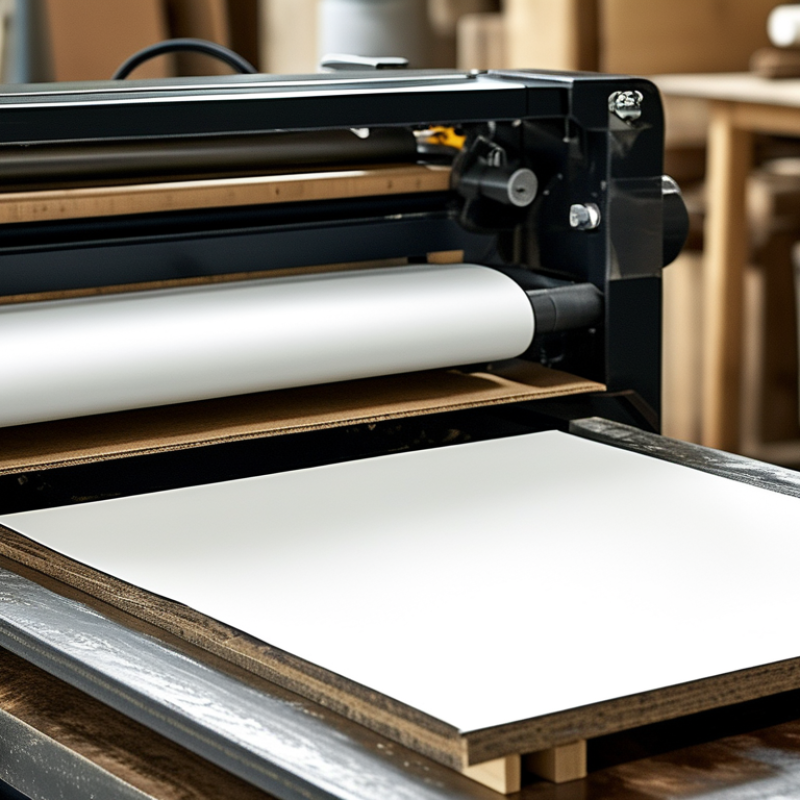
Why Choose a Flat Laminating Machine for Your Business?

What Is a Flat Laminating Machine?

A flat laminating machine is equipment that bonds a protective film to a flat surface using controlled heat, pressure, or both. The material usually moves between rollers or across a heated platen. This process can protect printed sheets, labels, menus, cards, signs, and lightweight boards from moisture, scratches, and handling.

The machine has several practical parts: a film holder, alignment guides, pressure rollers, a heating system, and a control panel. An operator places the substrate carefully, adjusts the temperature, and selects a suitable feeding speed. Too much heat may curl paper or damage sensitive surfaces. Too little pressure can leave bubbles and weak edges. Small details matter.

It is not foolproof.

In daily production, clean rollers are essential because dust can create repeated marks across every sheet. Film tension also needs attention. Loose film may wrinkle, while excessive tension can distort the finished piece. I have found that testing one sample first saves material and exposes problems early. However, flat laminating machines are not ideal for every format or irregular object. Their strength is consistent, even coverage on flat materials, especially when stable results matter more than complex shapes.

How Does a Flat Laminating Machine Work?

A flat laminating machine joins printed sheets with a protective film, adhesive, or functional layer. The process begins when an operator aligns the sheet against the machine’s side guides. The sheet then travels through heated or pressure-controlled rollers. Heat softens the adhesive, while pressure removes air between both surfaces. Cooling helps the laminate stabilize before stacking.

The roller gap matters greatly. Too much pressure can stretch film or bend board. Too little pressure may leave silvering, bubbles, or weak edges. Operators usually adjust temperature, speed, and nip pressure together. A slower pass can improve bonding, but it may reduce daily output. This is where practical experience matters. A clean roller and steady film tension often prevent more defects than higher heat.

Smithers valued the global flexible packaging market at approximately 201.8 billion dollars in 2023, with continued growth forecast through 2028. That expansion increases demand for consistent surface protection and efficient finishing. The Flexible Packaging Association also reports that packaging performance depends on multiple material layers, not appearance alone. Flat laminating supports this layered approach for cartons, posters, boards, and specialty sheets. However, the machine is not automatically precise. Humidity, uneven paper thickness, and rushed setup can change results. A small test batch remains the safer choice.

What Materials Can It Process?

A flat laminating machine is useful when a business handles sheets, boards, and printed materials that need cleaner protection. It can process paper menus, posters, certificates, photographs, labels, and classroom charts. Cardstock and lightweight cardboard are also suitable when their thickness matches the machine’s working range. The flat surface helps keep pressure even, especially around corners and narrow edges.

It can also laminate several film types, including polyester, polypropylene, and heat-activated pouch films. Some machines handle adhesive-backed films for signs or display panels.

Thin fabric may be processed for craft or promotional applications, but results depend on its weave and surface treatment. I have found that smooth materials feed more predictably than textured ones. Matte, glossy, and transparent finishes can create different visual effects.

Material testing remains important. A heat-sensitive photograph may curl, discolor, or lose surface detail. Recycled paper can release fibers and form small bubbles.

My early assumption was that thicker film always offered better protection, but it sometimes reduced flexibility and caused feeding problems. Operators should check material thickness, heat tolerance, and adhesive compatibility before production.

A small test sheet can reveal wrinkles, trapped air, or weak bonding before valuable stock is used. Moisture also matters. Damp paper may blister under heat. Clean rollers and consistent pressure support more reliable results.

What Business Benefits Does It Offer?

Why Choose a Flat Laminating Machine for Your Business?

A flat laminating machine gives operators tighter control over printed sheets, boards, labels, and packaging prototypes. Materials remain steady on a flat working surface. This helps reduce bubbles, wrinkles, and uneven adhesive coverage. Cleaner output can lower rework costs and protect valuable printed stock. It also supports short production runs without requiring complicated tooling changes.

The business case is practical. The Flexible Packaging Association’s 2023 industry report valued U.S. flexible packaging sales at approximately 39.5 billion dollars. That scale reflects continuing demand for durable, attractive packaging. PMMI’s 2023 State of the Industry report also placed U.S. packaging machinery shipments above 10 billion dollars in 2022. These figures indicate strong investment in production efficiency. A flat laminator may improve turnaround times, support customized orders, and reduce dependence on outside finishing services. It is not a magic fix. Poor setup still creates waste, and incorrect pressure can damage delicate materials.

Tips: Test temperature, pressure, and speed on spare sheets before production. Record successful settings for repeat jobs. Measure adhesive use and reject rates for thirty days. The data may reveal hidden savings. It may also expose an uncomfortable truth: your current process could already be efficient enough for low-volume work. Choose the machine only after comparing labor, maintenance, material waste, and expected order growth.

How Should Businesses Choose the Right Model?

Choosing a flat laminating machine starts with production reality, not the largest advertised capacity. Measure your usual sheet sizes, film types, adhesive needs, and daily output. Smithers reports that the global packaging market reached about $1.17 trillion in 2023 and is expected to keep expanding through 2028. That growth does not justify buying oversized equipment. It makes accurate matching more important.

Ask suppliers for verified figures under your materials. Compare running speed, heating stability, pressure control, changeover time, and usable sheet width. A machine rated at 5,000 sheets per hour may slow sharply with thick board or difficult film. Request a live trial using your own substrates. Check edge alignment, bubbles, curl, and adhesive coverage. Small defects become expensive at scale. Very expensive.

Energy use also deserves attention. The International Energy Agency identifies industrial efficiency as a major route to lower operating costs and emissions. Compare power consumption per finished sheet, not only the motor rating. Review heater control, standby settings, and compressed-air demand. PMMI’s packaging machinery research repeatedly highlights labor availability and equipment flexibility as major purchasing concerns. Choose controls that operators can learn quickly, but do not confuse a touchscreen with useful automation.

Calculate total cost over five years. Include tooling, maintenance, spare parts, training, floor space, and expected waste. Service response matters more than impressive brochures. I would also leave capacity for seasonal demand, but not too much. Idle equipment still consumes capital. A careful decision may feel slower, yet it exposes assumptions before they become production losses.

Why Choose a Flat Laminating Machine for Your Business? - How Should Businesses Choose the Right Model?

Typical specifications and selection guidance for common flat laminating machine configurations

Selection Dimension Compact Flat Model Mid-Size Flat Model Wide-Format Flat Model Recommended Decision Rule
Typical working width Up to 600 mm 601–1,000 mm 1,001–1,600 mm Choose a width at least 50–100 mm wider than the largest regular sheet or panel.
Common applications Small graphics, menus, photographs, labels, certificates and short-run documents Posters, signage, packaging samples, presentation boards and routine commercial work Large-format graphics, exhibition panels, architectural boards and high-volume signage Match the machine to the largest recurring job, not only to occasional oversized work.
Laminating method Flat platen or heated flat-bed pressing Heated flat platen with controlled pressure and dwell time Large heated platen, vacuum-assisted bed or segmented pressure system Use flat-bed pressure when consistent bonding across rigid or uneven substrates is important.
Typical temperature range Ambient to approximately 120°C Ambient to approximately 160°C Ambient to approximately 160–200°C, depending on the heating system Select a range compatible with the adhesive film and substrate; always follow material supplier instructions.
Typical pressure capability Approximately 0.2–0.6 MPa Approximately 0.3–0.8 MPa Approximately 0.4–1.0 MPa, depending on platen design Higher or more uniform pressure is useful for rigid boards, composites and materials with surface variation.
Typical cycle time Approximately 30–180 seconds per cycle Approximately 45–240 seconds per cycle Approximately 60–300 seconds per cycle Compare complete cycle time, including loading, heating, pressing, cooling and unloading.
Typical electrical input Approximately 2–5 kW Approximately 4–10 kW Approximately 8–20 kW Confirm available voltage, phase, circuit capacity and installation requirements before purchase.
Automation level Manual loading with digital temperature and timer controls Programmable temperature, pressure, dwell time and cycle memory Programmable recipes, vacuum control, multi-zone heating and assisted loading options Pay for automation that reduces labor or improves repeatability at your actual production volume.
Suitable production volume Occasional use to approximately 20–40 cycles per day Regular use of approximately 40–100 cycles per day Continuous or high-volume use exceeding approximately 100 cycles per day Use measured daily demand and peak workload rather than average demand alone.
Approximate footprint Approximately 1.0–2.0 m² Approximately 2.0–4.0 m² Approximately 4.0–8.0 m² Allow extra space for material staging, operator access, ventilation and maintenance.
Main advantage Low space requirement, lower power demand and simple operation Balanced productivity, flexibility and operating cost Large working area, stronger process control and higher output potential Select the smallest configuration that meets size, quality and throughput requirements.
Key limitation Limited sheet size and lower output for large production runs Requires more floor space and electrical capacity than compact equipment Higher purchase, installation, energy and maintenance requirements Evaluate total cost of ownership instead of comparing purchase price only.
Best fit for business type Schools, offices, copy centers, small print operations and prototype workshops Commercial printers, sign shops, packaging departments and general manufacturing teams Large-format graphics producers, industrial laminators and high-throughput production facilities Choose according to substrate size, daily volume, quality tolerance, available utilities and operator skill.

Note: Values are typical planning ranges for generic flat laminating equipment. Actual performance varies with platen design, adhesive type, substrate thickness, heating method, operating voltage and production conditions.