Choosing among China’s top chemical pump manufacturers and suppliers requires more than comparing catalog prices. A reliable chemical pump must match fluid chemistry, temperature, viscosity, pressure, and operating cycles. It should also withstand corrosion near storage tanks, reactors, and transfer lines.
Dr. Martin R. L. Stone, a chemical process equipment specialist, once said, “Pump reliability begins with understanding the process, not selecting the pump.” This practical view matters when reviewing Chinese suppliers. Experienced manufacturers usually provide material data, performance curves, factory testing, and application guidance. Look for proven materials such as fluoropolymers, ceramic components, stainless steel, or specialized alloys. The correct choice depends on the chemical, not the brochure.
Details reveal quality. Ask whether the supplier tests flow and head under realistic conditions. Check seal design, motor protection, spare-part availability, and response time after delivery. A supplier may offer an attractive quotation but provide limited technical support. That weakness can become expensive beside a busy production line.
China has many capable chemical pump manufacturers, but quality is not uniform. Some factories focus on export consistency, while others remain stronger in domestic projects. Certifications help, yet they do not replace inspection and references. I would review drawings carefully, request a sample test, and question unclear claims. Small omissions matter.
This guide compares leading Chinese manufacturers and suppliers through product range, engineering capability, quality control, customization, delivery experience, and after-sales service. The goal is not to name one universal winner. It is to identify the supplier that fits your process safely and realistically.
A reliable chemical pump manufacturer in China is defined by engineering discipline, not by a long product list. The supplier should understand fluid concentration, temperature, viscosity, pressure, and possible crystallization. These details determine the pump structure and material selection. A proper manufacturer asks for process data before recommending a model.
Practical experience matters. Engineers should explain why a fluoroplastic lining, alloy component, or ceramic seal fits a specific application. They should also provide performance curves, material certificates, inspection records, and test results. Factory testing should check flow, pressure, vibration, leakage, and motor compatibility. Small details matter.
Traceability builds confidence. Each critical component should have a clear source and inspection record. Reliable suppliers also offer installation guidance, spare-parts support, and timely technical responses. After-sales service reveals real commitment. Not every selection will be perfect. Process conditions can change, and early assumptions may prove incomplete. A professional manufacturer admits this risk, reviews field feedback, and adjusts the design instead of hiding the problem. That attitude is often more valuable than a polished sales promise.
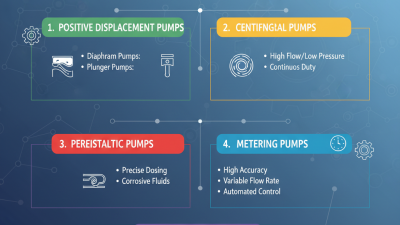
Chinese chemical pump suppliers commonly manufacture magnetic-drive, diaphragm, peristaltic, centrifugal, gear, screw, and metering pumps. Magnetic-drive pumps suit corrosive liquids because they remove the shaft seal. Diaphragm pumps handle slurries and irregular dosing. Peristaltic pumps protect fluids inside flexible tubing, which helps with abrasive chemicals. Centrifugal models support higher flow rates in transfer systems. Gear and screw pumps provide steady movement for viscous liquids. Material choice matters. Suppliers often offer polypropylene, PVDF, PTFE-lined, ceramic, and stainless-steel wetted parts.
A 2024 Grand View Research assessment estimates the global chemical pumps market will grow at roughly 4.8% annually through 2030. This growth reflects demand for safer dosing, wastewater treatment, and process automation. Chinese manufacturers increasingly provide variable-frequency drives, digital flow control, and leak detection. These features improve control around storage tanks, blending lines, and laboratory skids. However, selecting a pump by flow rate alone remains a common mistake. Viscosity, vapor pressure, temperature, solid content, and required discharge pressure must also be checked. The U.S. Department of Energy identifies pumping systems as a major industrial electricity load, so motor efficiency deserves attention. Real performance can differ from catalogue figures. Request material certificates, factory test data, pressure curves, and endurance records before purchase. Field feedback is still valuable. Supplier documentation may look complete, yet installation conditions often expose overlooked weaknesses.
Indicative flow-capacity ranges commonly associated with major chemical pump categories. Actual performance depends on pump design, materials, pressure, temperature, and fluid properties.
Centrifugal pumps generally cover the widest flow range, while metering and diaphragm pumps are preferred when accurate dosing, high pressure, or strong chemical resistance is required. Magnetic-drive, peristaltic, and diaphragm designs are also widely selected when leakage control is important.
China’s chemical pump manufacturers support petrochemical, water treatment, pharmaceutical, mining, food processing, and electronics industries. The International Energy Agency reports that chemicals may consume 16% of global oil demand by 2030. This creates sustained demand for reliable fluid-transfer equipment.
Petrochemical plants need pumps for acids, solvents, polymers, and high-temperature fluids. Water-treatment facilities require accurate dosing for corrosion control and disinfection. Pharmaceutical plants demand hygienic designs, stable flow, and traceable materials.
Mining operations use chemical pumps for flotation, leaching, and wastewater treatment. Semiconductor production also needs ultra-clean pumps for chemical delivery. SEMI reported global semiconductor manufacturing capacity above 30 million wafers per month in 2024. That scale increases the value of low-particle, leak-resistant equipment. However, capacity data does not prove every pump supplier meets cleanroom requirements. Qualification remains essential.
Tips:
Match the pump to viscosity, temperature, pressure, and chemical compatibility. Ask for material certificates, test records, and lifecycle data. Check seal performance under real operating conditions, not only laboratory conditions. A lower purchase price can hide higher maintenance costs. Site experience matters, but it can still be imperfect; operators should review failure records and inspect installation quality before approval.
Evaluating Chinese chemical pump suppliers requires more than comparing prices. Start with the pump’s actual service conditions: fluid concentration, temperature, viscosity, flow rate, pressure, and operating hours. A reliable supplier should explain material choices clearly, such as fluoropolymer linings, ceramic components, or corrosion-resistant alloys. Vague answers deserve caution.
Request technical drawings, performance curves, inspection records, and material certificates. Check whether serial numbers connect the pump to documented production and testing records. Factory experience matters. Ask how the supplier handles shaft alignment, seal installation, vibration testing, and pressure testing. A video call can reveal useful details, but an independent factory audit is stronger evidence. Photos can be staged.
Ask for a sample unit or a reference installation with similar chemical conditions. Speak with the operator, not only the sales contact. Confirm spare-part availability, response times, warranty boundaries, and the language used in technical support. A supplier may promise fast delivery, yet fail to explain replacement-seal lead times. That gap matters. I have found that detailed questions often reveal more than polished catalogs. Still, no evaluation method is perfect. Laboratory results may not predict years of field exposure, especially when operators change concentration or maintenance habits. Put agreed specifications, acceptance tests, and change-control procedures into the contract. Keep records of every revision.
China Top Chemical Pump Manufacturers and Suppliers?
Chemical pump manufacturers in China are increasingly evaluated by documented processes, not factory size alone. Reliable suppliers should explain which standards guide design, testing, and material selection. ISO 9001 supports controlled production, while ISO 2858 may apply to selected centrifugal pump dimensions. API 685 can be relevant for seal-less process pumps, depending on the application. Standards must match the service.
Material traceability is essential. A serious factory can identify the alloy, batch, heat treatment, and inspection record for wetted parts. Engineers should review chemical compatibility, temperature limits, pressure ratings, and seal performance before approving a design. In production, dimensional checks, hydrostatic tests, vibration testing, and performance testing should be recorded. Small details matter.
The evidence should be practical. Ask for test curves, inspection reports, calibration certificates, drawings, and a clear deviation process. Export-ready suppliers usually understand packing protection, moisture control, labeling, spare parts, and installation documents. They should also provide certificates required by the destination market, such as CE-related documentation when applicable. Requirements vary by country.
No factory is flawless. A supplier that admits recurring defects and shows corrective actions may be more trustworthy than one promising perfect quality. One weakness deserves attention: some inspections still depend heavily on manual records. Digital traceability is improving, but it is not universal. Buyers should audit communication speed, sample consistency, after-sales response, and replacement-part availability before placing large orders. Experience often reveals more than a polished catalogue.
| Evaluation Dimension | Industry-Recognized Requirement | Quality-Control Evidence | Export and Compliance Relevance | Applicability |
|---|---|---|---|---|
| Quality Management System | ISO 9001:2015 provides a framework for documented quality-management processes, corrective actions, and continual improvement. | Valid certificate issued by an accredited certification body, controlled procedures, internal-audit records, and traceable corrective-action reports. | Often requested during supplier qualification and tender reviews. Certificate scope should cover the relevant pump manufacturing activities. | Commonly requested |
| Centrifugal Pump Design | ISO 2858 is commonly used for end-suction centrifugal pump dimensions and performance classification. ISO 5199 covers technical requirements for centrifugal pumps in industrial applications. | Approved drawings, hydraulic performance curves, dimensional inspection reports, and pump identification records. | Using recognized dimensional and performance standards can simplify technical evaluation and replacement planning. | Applicable to relevant centrifugal designs |
| Magnetic-Drive Pumps | Magnetic-drive construction eliminates a conventional shaft seal and is selected where leakage prevention is important. The design must be matched to temperature, pressure, solids, and chemical compatibility. | Containment-shell inspection, no-load and operating tests, leak checks, and verification of the specified operating envelope. | Useful for corrosive, toxic, or volatile fluids where reducing atmospheric leakage is a priority. | Design-dependent |
| Chemical Compatibility | Wetted materials may include stainless steel, duplex stainless steel, alloy materials, PTFE, PVDF, polypropylene, or other polymers, depending on the fluid and operating conditions. | Material certificates, heat-number traceability, chemical-resistance review, hardness checks where required, and verification of gasket and seal materials. | Material selection should consider concentration, temperature, pressure, abrasion, permeation, and local safety requirements. | Application-specific |
| Hydrostatic and Pressure Testing | Pressure testing should follow the applicable product standard, approved design, and purchaser specification. A 1.5-times design-pressure hydrostatic test is used in some industrial pump standards, but it is not universal for every chemical pump. | Calibrated pressure gauges, test records showing test pressure and duration, inspection sign-off, and documented acceptance criteria. | Test requirements should be agreed before production because pressure values and test duration vary by standard and pump construction. | Required when specified |
| Performance Testing | Verification normally covers flow, head, speed, power, efficiency, and vibration against the approved duty point and tolerance requirements. | Calibrated flow meters, pressure instruments, tachometers, power meters, vibration readings, and signed factory test reports. | Factory performance data supports acceptance testing, commissioning, and comparison with the purchaser’s datasheet. | Strongly recommended |
| Rotating-Equipment Balance | Impellers, rotors, and other rotating parts should be balanced to the specified balance grade and operating speed where applicable. | Dynamic-balancing report, rotor identification, balance grade, correction record, and final runout inspection. | Improves vibration control, bearing life, reliability, and suitability for continuous industrial service. | Recommended for rotating assemblies |
| Dimensional Inspection | Critical dimensions should conform to approved drawings, applicable standards, and customer connection requirements. | Coordinate-measuring or calibrated-tool records, flange and shaft measurements, inspection checklists, and drawing revision control. | Accurate dimensions reduce installation problems and help ensure interchangeability with existing piping systems. | Standard manufacturing control |
| Welding and Fabrication | Fabricated pump parts should use approved welding procedures and qualified personnel when welding is part of the construction. | Welding procedure specifications, welder qualifications, weld maps, visual inspection, and non-destructive testing when required. | Documentation may be required for pressure-containing or safety-critical components, especially in regulated industries. | When welded construction is used |
| Electrical Motor Compliance | Motor selection should match voltage, frequency, enclosure, insulation class, duty rating, hazardous-area classification, and local electrical requirements. | Motor nameplate data, routine test certificate, insulation-resistance test, efficiency information, and conformity documentation. | Electrical requirements differ by destination; voltage, frequency, cable entry, and certification should be confirmed before order placement. | Project- and country-specific |
| Hazardous-Area Service | Equipment installed in explosive atmospheres may require ATEX, IECEx, or another accepted hazardous-area certification, depending on the destination and installation zone. | Certificate number, equipment protection concept, gas or dust group, temperature class, marking, and conformity documentation. | Certification must match the actual hazardous-area classification; ordinary industrial certification is not a substitute. | Required only for classified areas |
| Surface Protection | Coating systems should be selected according to the external environment, chemical exposure, humidity, temperature, and required service life. | Surface-preparation record, coating type, dry-film-thickness readings, adhesion results when specified, and batch traceability. | Appropriate coating documentation is useful for coastal, outdoor, chemical-plant, and high-humidity installations. | Environment-dependent |
| Sealing and Leakage Control | Mechanical seals, packing, gaskets, and containment arrangements must be compatible with the pumped medium and operating conditions. | Seal datasheet, elastomer and face-material certificates, assembly inspection, leakage test, and spare-parts identification. | Clear seal specifications are important for hazardous, corrosive, toxic, high-temperature, or crystallizing fluids. | Application-specific |
| Traceability | Critical components should be traceable from incoming material through machining, assembly, testing, and final shipment. | Serial numbers, heat certificates, inspection records, component lists, production travelers, and final dossier index. | Traceability supports warranty evaluation, audits, maintenance, and regulatory documentation after export. | Best practice |
| Factory Acceptance Documentation | A technical dossier may include approved drawings, datasheets, operation manuals, spare-parts lists, test reports, certificates, and packing records. | Document register, revision-controlled files, signed inspection and test plan, final release note, and equipment nameplate details. | Complete documentation reduces customs, installation, commissioning, and after-sales-support delays. | Common project requirement |
| Packaging for Export | Packaging should protect against shock, moisture, corrosion, contamination, and movement during multimodal transport. | Photographs before sealing, lifting-point labels, packing list, moisture protection record, and crate or pallet inspection. | Wood packaging used in international trade may need to comply with ISPM 15 requirements in the destination market. | Required for international shipment |
| Shipping and Commercial Documents | Typical documents include commercial invoice, packing list, transport document, certificate of origin when required, and applicable conformity documents. | Document consistency checks covering model, quantity, serial number, weights, dimensions, tariff information, and consignee details. | Accurate documents support customs clearance and reduce the risk of shipment holds or data discrepancies. | Required by shipment and destination |
| After-Sales Support | Reliable support normally includes installation guidance, operating instructions, troubleshooting information, spare-parts identification, and warranty terms. | Manuals, exploded-view drawings, spare-parts schedules, response procedures, and documented warranty conditions. | Remote technical support and readily identifiable spare parts are particularly important for overseas installations. | Commercially important |